By Chant And Flower
wolf saints & water wagtails

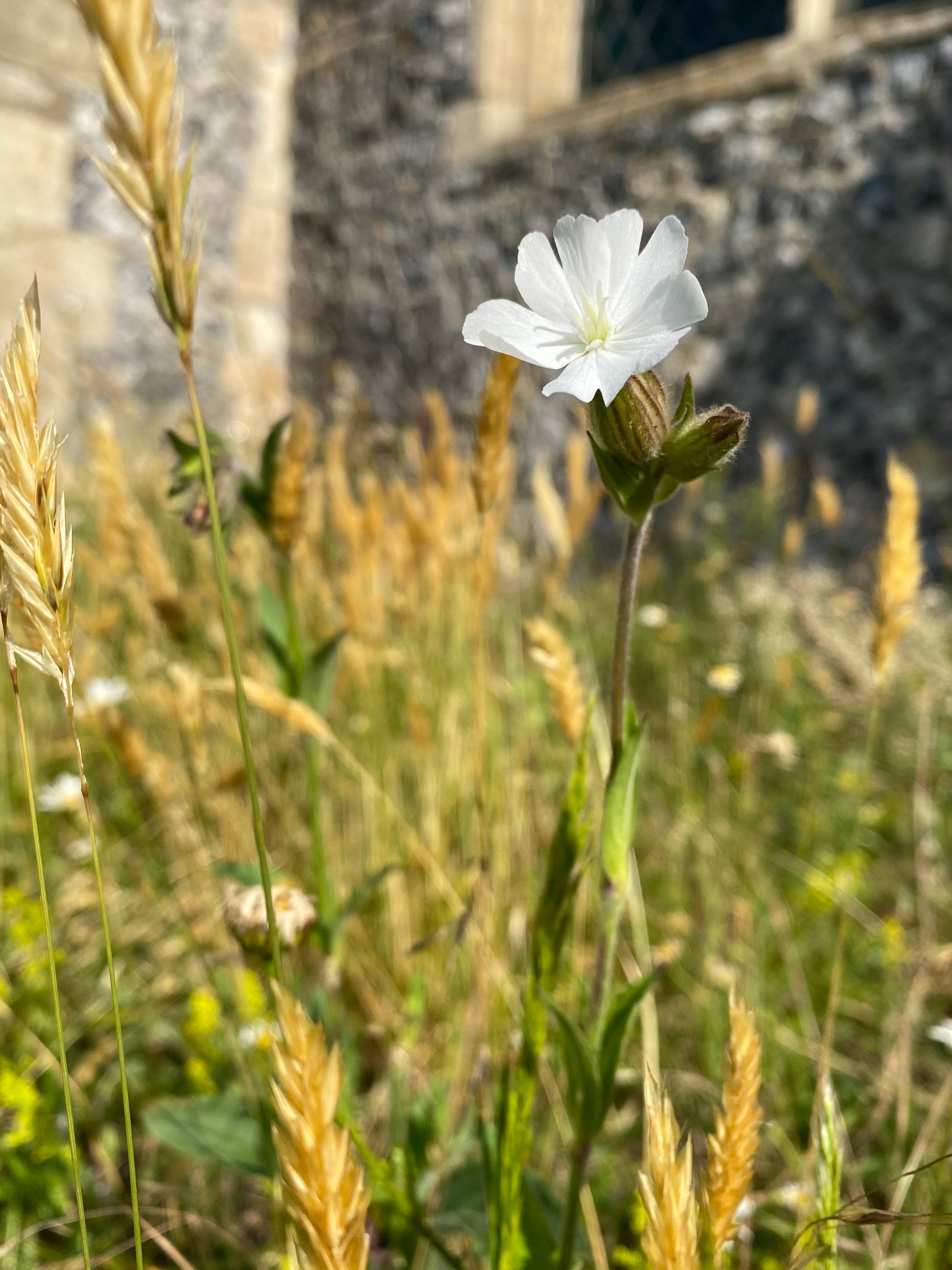
White campion in the churchyard, 17 June 2026
Hello, and welcome to this waxing moon in June, just before the sun reaches its zenith and stands still over the land.
Now, sunshine stretches into the evening almost until bedtime, and the temptation to make the most of it is strong. The old canal at 8pm on a weekday is a very different place from the playground it becomes on a warm weekend. Gone are the kayakers and paddle boarders, even the swimmers, and the model boat club meet only on Sunday mornings so there are no brightly painted tug-boats or low white sails. Now, the rippling circles that show where fish swirl and dip beneath are the only signs of activity on the silvery surface.
Not quite the only sign, as I watch half a dozen swallows - or are they martins, I wonder, as I gaze intently at the degree to which their tails are forked - zigzagging and swooping so low over the canal that their beaks and bellies scatter diamonds in their wake.
Then, a flash of pale yellow and a pair of water wagtails rise from the depths of the old lock with its continuous trickle. They dance in mid air over the reed-bed before darting back into the dripping vegetation, perhaps to feed their young family.
Time for me to roost too, so I slip off the bench, proudly emblazoned with the name of the model boat club, and turn Kizzy the Berlingo for home.
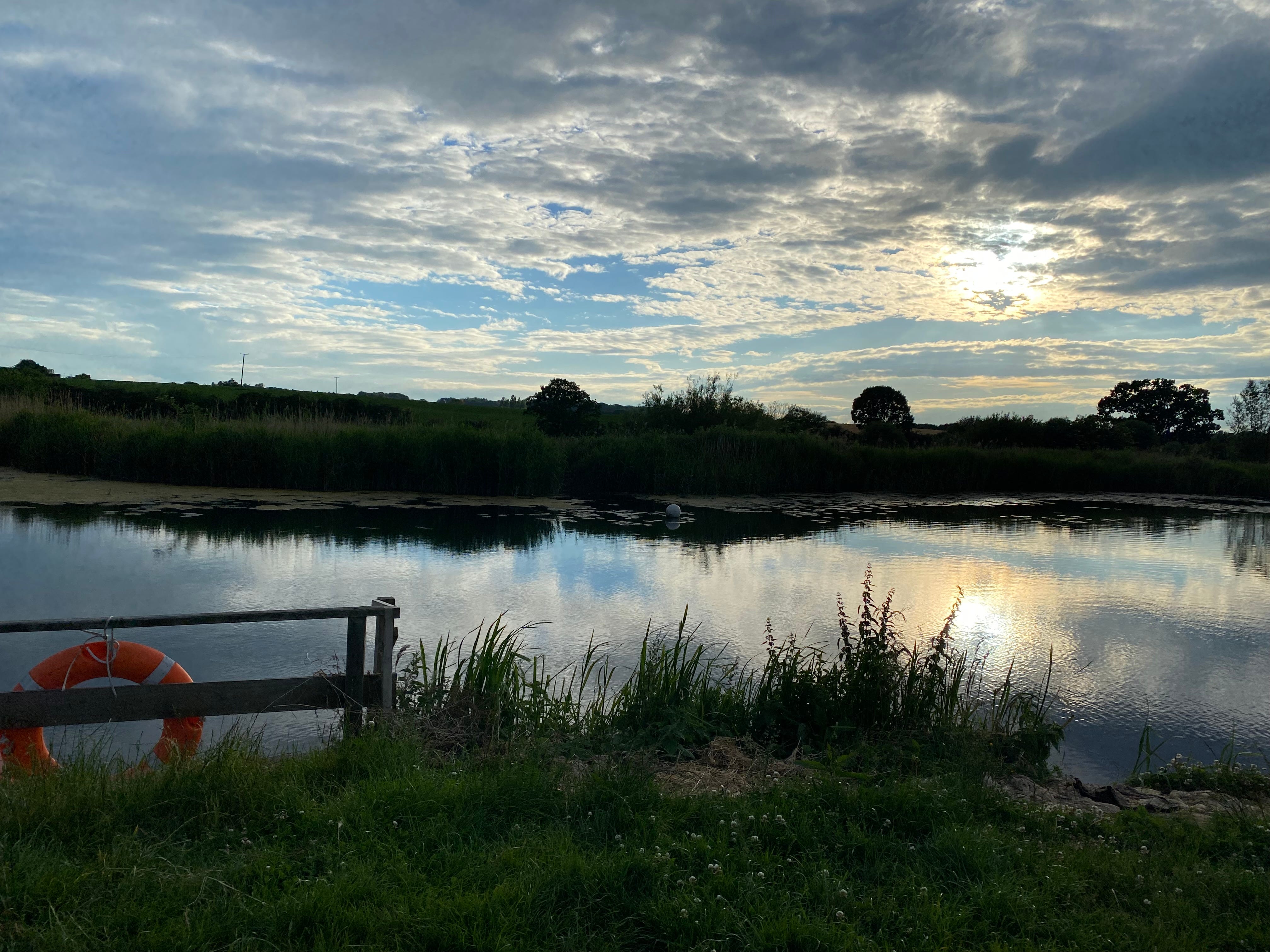
Evening at the old canal, 17 June 2026
In this edition of Bracken & Wrack:
A Poem In Pieces: Part 3 - Under The Prayer Wheeling Moon
Where Salt & Sweet Waters Meet: the story of a wayfarer’s saint
Saint Botolph’s Elderflower & Lemon Pudding
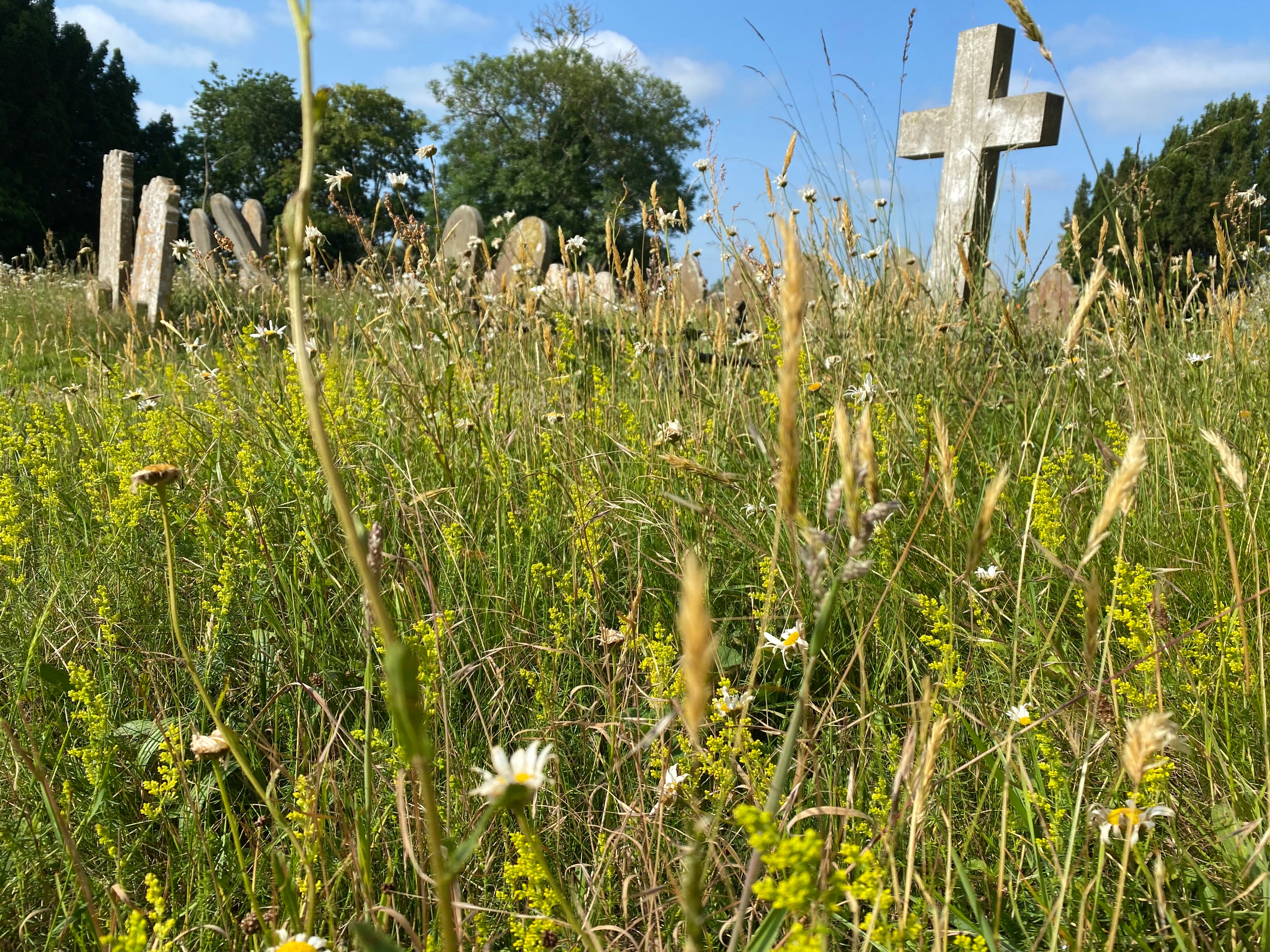
The churchyard, filled with dancing Lady’s Bedstraw, 17 June 2026
A POEM IN PIECES: Part 3 - Under The Prayer Wheeling Moon
In The Dew Dipped Year - a couple of Bracken & Wracks ago - I introduced this (perhaps somewhat sacrilegious) mini series. Basically, it consists of chopping up one of my favourite Dylan Thomas poems into bite-size sections, the better to revel in Thomas’ words and phrases for their own sake without scratching our heads trying to wring every last scrap of meaning and understanding from them.
This time I’m quoting three stanzas so it’s a bit more of a plateful, but that seemed to offer the best flow so I hope you won’t mind. As ever, some of those phrases make me want to break out into visual media, but until that happens, please enjoy these words as words and do let me know if they bring up any thoughts, memories, poetry or artistic impulses in you, too.
(Click below to hear an audio version of the extract)
Her robin breasted tree, three Marys in the rays.
Sanctum sanctorum the animal eye of the wood
In the rain telling its beads, and the gravest ghost
The owl at its knelling. Fox and holt kneel before blood.
Now the tales praise
The star rise at pasture and nightlong the fables graze
On the lord’s-table of the bowing grass. Fear mostFor ever of all not the wolf in his baaing hood
Nor the tusked prince, in the ruttish farm, at the rind
And mire of love, but the Thief as meek as the dew.
The country is holy: O bide in that country kind,
Know the green good,
Under the prayer wheeling moon in the rosy wood
Be shielded by chant and flower and gay may youLie in grace. Sleep spelled at rest in the lowly house
In the squirrel nimble grove, under linen and thatch
And star: held and blessed, though you scour the high four
Winds, from the dousing shade and the roarer at the latch,
Cool in your vows.
Yet out of the beaked, web dark and the pouncing boughs
Be you sure the Thief will seek a way sly and sure
Dylan Thomas ‘In Country Sleep’ (extract)
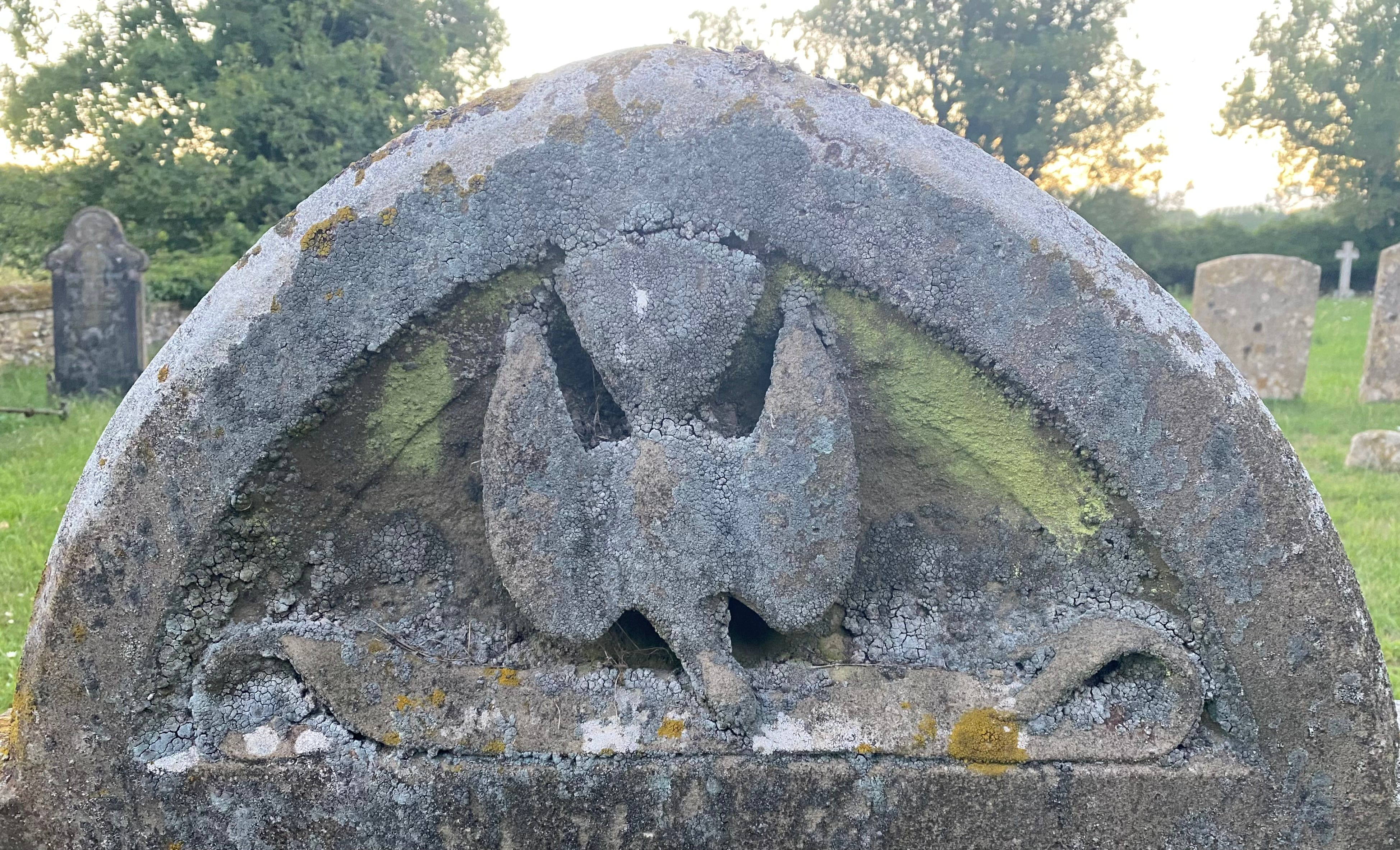
Grave-dove with patina, St Ethelbert’s church, Wretham, Norfolk, 13 June 2026
WHERE SALT & SWEET WATERS MEET: the story of a wayfarer’s saint
As one of the earliest and most revered of early East Anglian saints, St Botolph is of special interest to me, and even more so as he has long been held as the patron saint of wayfarers.
From a noble seventh century family - related to King Anna and thus to the Wuffingas - Botolph (Anglo-Saxon Botwulf) and his brother Adolph (Athwulf) were educated in a Benedictine Abbey in France. Later, Botolph came back to his native East Anglia, where King Anna granted him land on which to build a monastery. This land was at Icanhoh, almost definitely the parish now called Iken, near Aldeburgh in Suffolk.
On his arrival at the marshes, Botolph is said to have expelled the ‘devils’ that dwelled there. A prosaic explanation of this is that he had the land drained which put paid to the night glow of marsh gas, and perhaps that demon disease of damp areas, the ague. Like the demons who tormented Guthlac at Crowland, it’s also possible that the demons were disgruntled natives of the area.
Iken today is a very small village on the estuary of the river Alde. The promontory of land where the church stands was once an island. Even though it is no longer detached from the land, it still feels very remote, and it’s easy to see why its seclusion appealed to Botolph as a place to build his monastic foundation.
As an edge-place between earth, water and a vast sky, and further as a place where salt and sweet waters meet, Iken does indeed have a magical feel. The saint’s story has one explanation as to why he is associated with boundaries and portals, but this landscape tells its own tale of ‘otherness’, of a soul straddling the worlds.
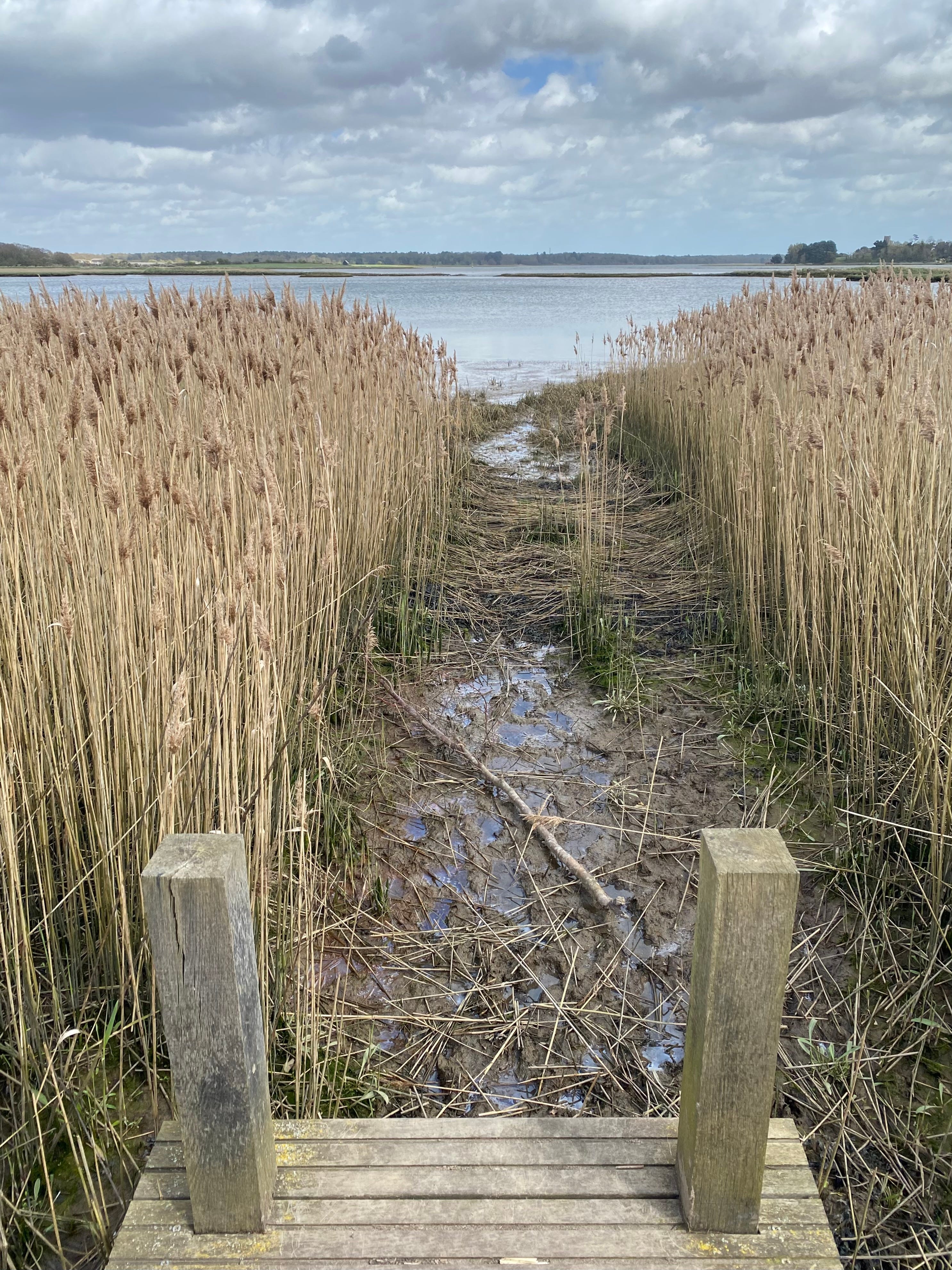
Iken, Suffolk
I have visited twice, and walked on the estuary beach and stepped inside Botolph’s church. On the first occasion we ate our picnic lunch above the muddy sand and made a mindful mandala of finds we picked up, placing them intuitively in honour of the spirits and ancestors who seem to drift gently over this place. The second time was part of our pilgrimage from my old cottage here in North East Norfolk to Sutton Hoo in deepest Suffolk, the resting place of Wuffinga royalty. How apt to have paid our respects to one of their kin as we passed by Botwulf’s marshy domain.
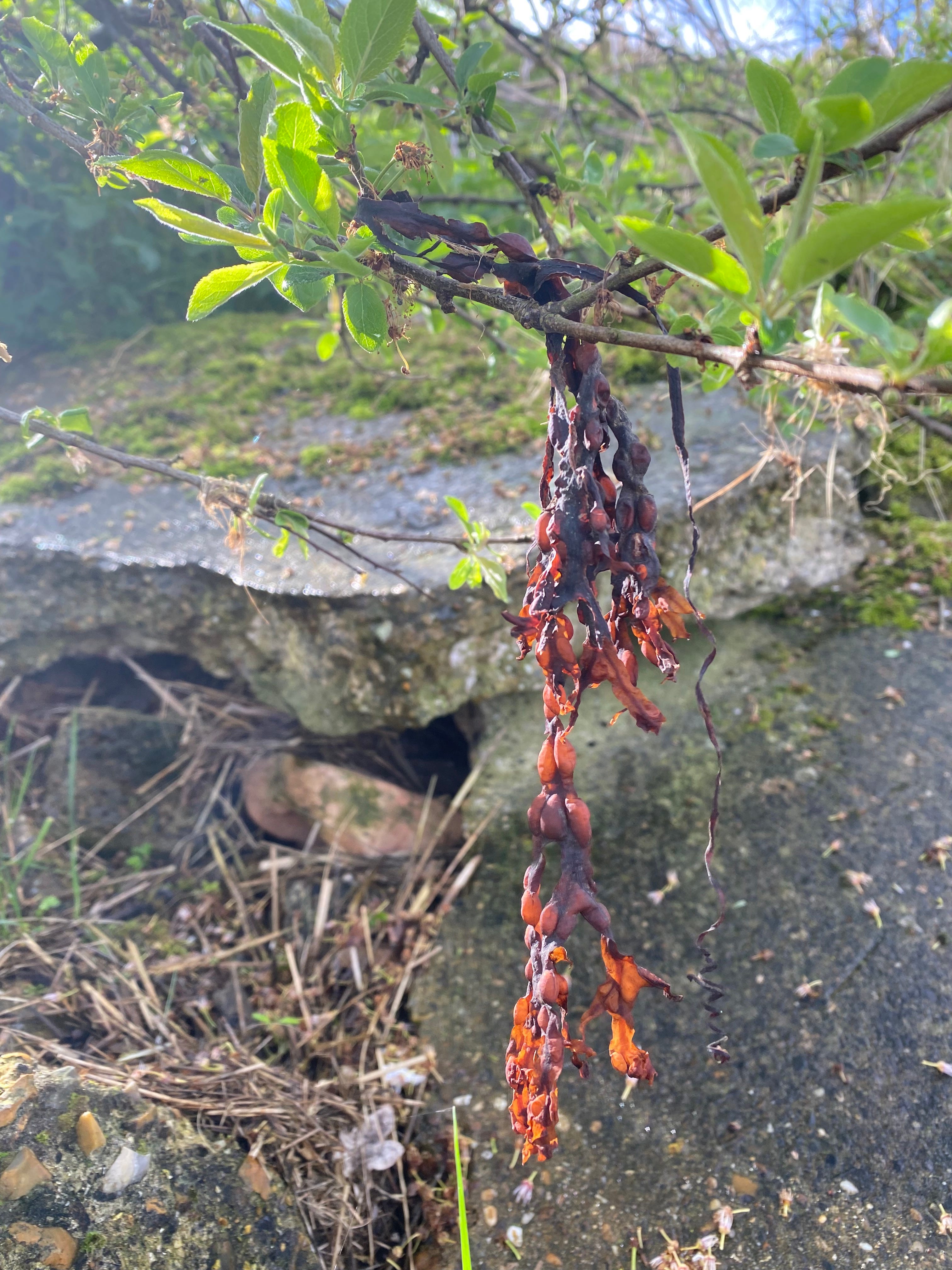
Between the worlds: stranded seaweed caught on an elder tree (see St Botolph’s recipe below), Iken, Suffolk, 5 April 2024
The saint died on 17 June 680 after a long life of teaching and upholding the Christian faith. His monastery lived on for a further two centuries but in 870 was destroyed in an attack by the Vikings. Later, King Edgar (963-967) gave orders that the remains of the saint be taken from the monastery ruins and his relics be divided into three parts to rest in Ely, Thorney and Westminster Abbey. It’s unclear whether all these potent artefacts reached their intended locations, though. Apparently, the precious cargo had only got as far as Grundisburgh in Suffolk when King Cnut gave counter orders that at least some of the relics be allocated to Bury St Edmunds to boost their collection (and their coffers!)
Westminster’s share of the saintly relics were brought to London through various towns and eventually through the four City gates of Aldersgate, Bishopsgate, Aldgate and Billingsgate, after which churches at their entrances were dedicated to St Botolph. Interestingly, it seems that the association with wayfarers and travellers began with his relics being conveyed from place to place by this strange circuitous route.

Despite the fact that little is known about his life, Botolph had a strong cult in the Middle Ages. Even now, over 60 churches bear a dedication to him. Often, these mark a gateway, boundary or other liminal place. Boston in Lincolnshire is named after him, as is Botesdale in Suffolk. His brother Adolph (or Athwulf, as I prefer) was also a saint, although even less is known of him, and the pair were originally buried in the same grave.
St Botolph’s emblem is said to be dogs’ heads, but of course given his Anglo-Saxon name and connections these could easily be wolves.
Amazingly, in 1977 the renowned archaeologist Stanley West discovered a Saxon cross built into the tower of Iken church. With its ‘dogs’ head’ carvings, it must surely be connected to St Botolph, making it almost impossible to believe that ‘Ikanho’ could be anywhere other than Iken (there are alternative theories).
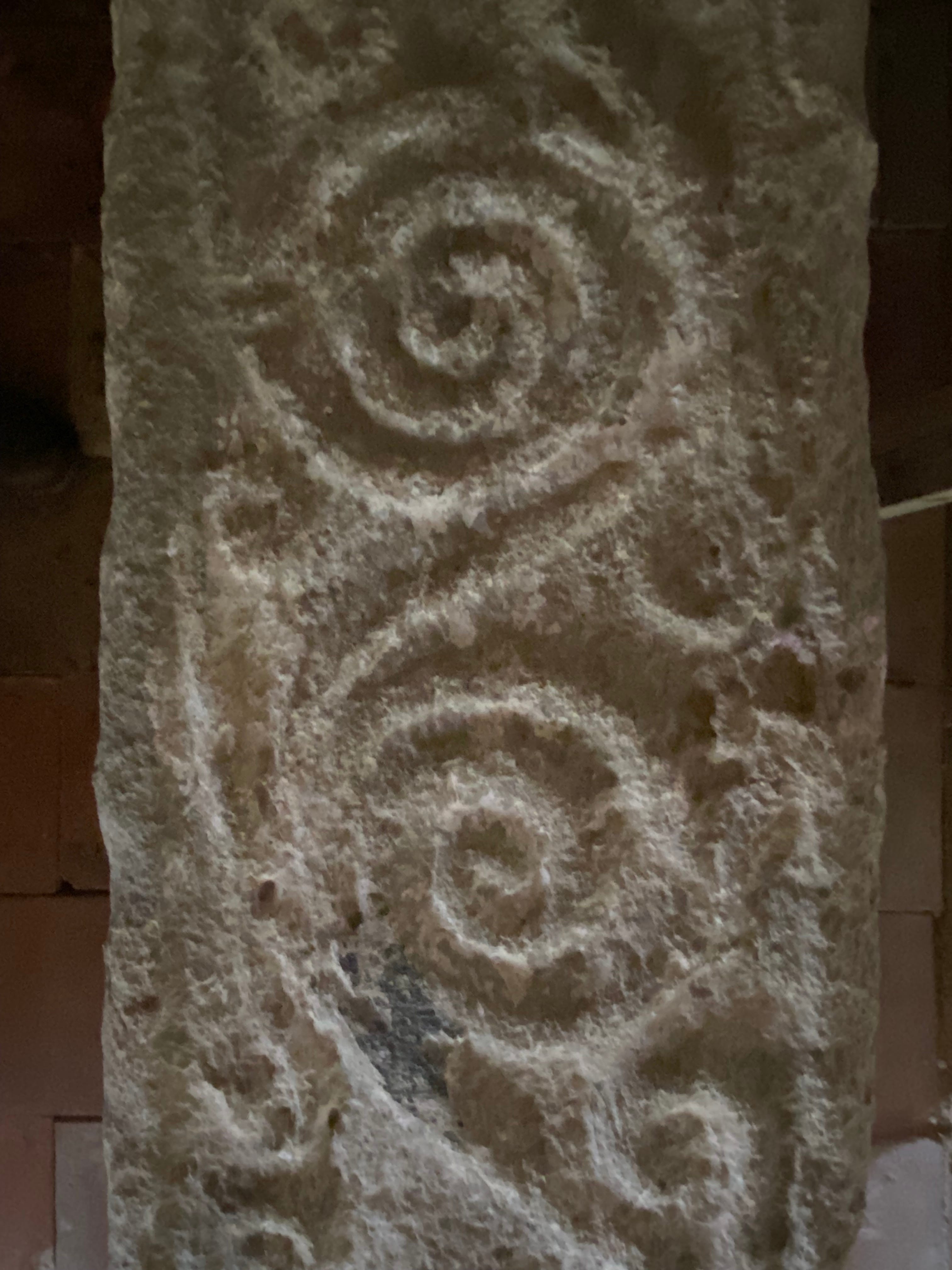
Part of the Saxon cross shaft that stands in St Botolph’s Church, Iken to this day, 5 April 2024
Gazing over the estuary with the scent of seaweed and mud in my nostrils, and later touching the ancient cross shaft that had lain hidden for so long in plain sight, I can’t help feeling that this enigmatic saint would have loved this place as much as I did.
SAINT BOTOLPH’S ELDERFLOWER & LEMON PUDDING
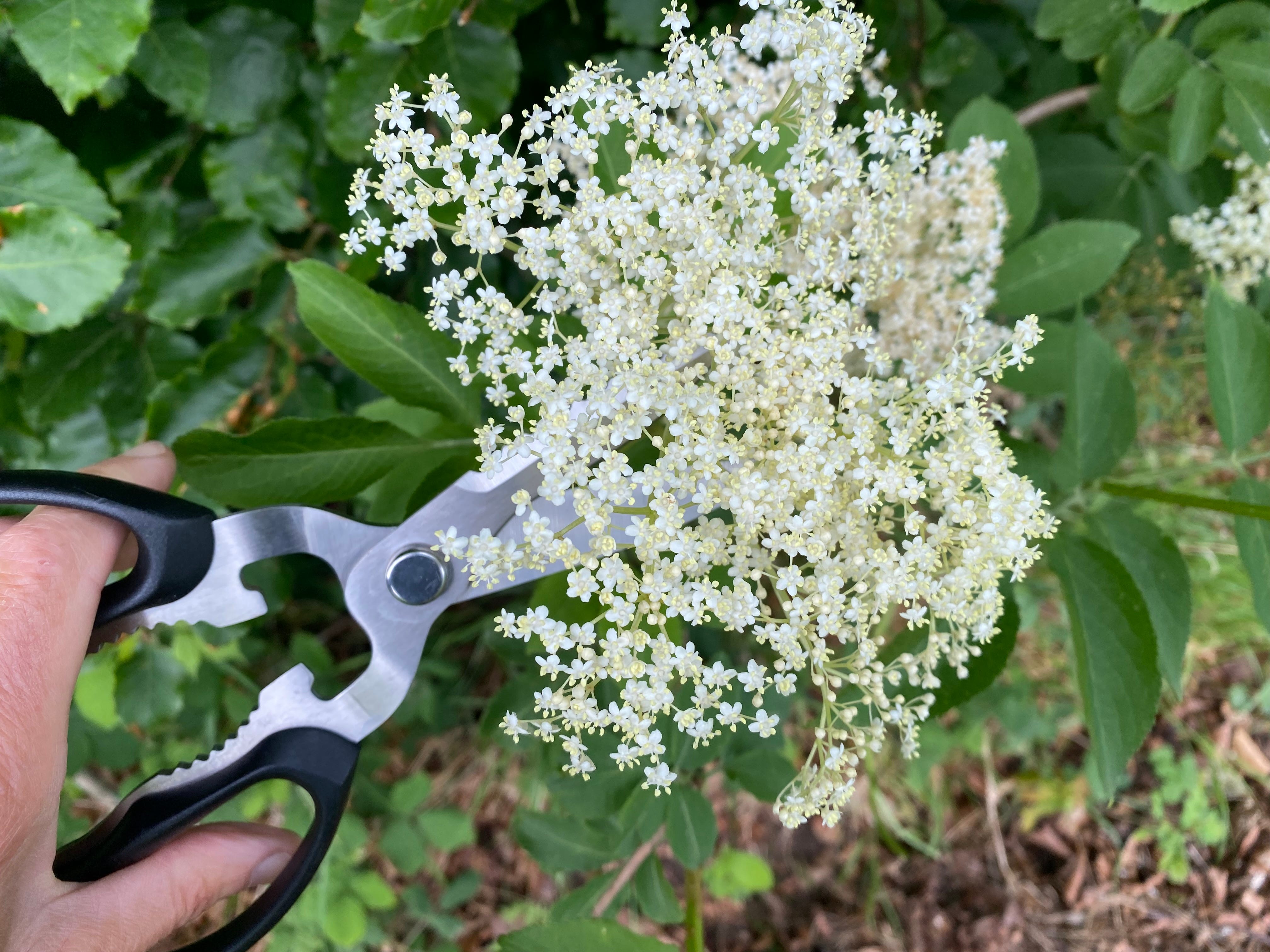
The sharp eyed among you will have noticed that St Botolph’s Feast Day is 17 June, meaning we are now within his Tide which stretches until 30 June, thirteen days later and straddling the Midsummer Solstice. What better excuse could there be for the making of this celebratory pudding?
Early English monasteries had more continental connections than might be imagined, but I can’t be absolutely sure that lemons were available in St Botolph’s kitchen at Iken. One thing I do know, though, is that elder trees would have abounded there - as, of course, you will see above that they still do - being extremely adaptable in general and seeming especially happy in damp areas.
Here in Norfolk, the elderflowers are just going over, and hard green berries are spiking the bushes like exploding galaxies. But some late-opened clusters still show creamy white, and with any luck it should be possible to find enough for a homemade elderflower cordial if you fancy making your own to add an extra touch of seasonal ritual into this recipe.
If you’re part of our Between The Moons community (and you would be very welcome to join us, if you’re in a position to upgrade your membership) you will already have the recipe I’ve found that’s closest to the one my mum used to make year after year when I was a child. I can still see that glass bowl with the floating lemon slices and darkening flower heads, and breathe in the scent of early summer that rose to meet me as I stirred it.
Of course, if you don’t live in a place where elderflowers grow, or it’s the wrong time of year where you are, or you just prefer to use a bottle of ready-made cordial - which of course is much more readily available these days - that’s perfect too.
This recipe is vegan, and closely adapted from one given by Domestic Gothess, whose site and recipes I highly recommend. She does use vegan butter, which I prefer not to do, but I have followed her here with its use as I think it probably works better than olive oil in a sponge like this. However, feel free to substitute non-vegan butter and yogurt if appropriate for you. You can also use gluten free plain flour.
170g ground almonds
150g plain white flour
20g cornflour
150g caster or granulated sugar (I use organic golden)
2 tsp baking powder
120g soy or coconut yogurt
150g vegan butter, melted
60ml elderflower cordial, undiluted
Zest of 2 lemons
For the drizzle:
6 tbsp elderflower cordial, undiluted
2 tbsp lemon juice (or more for a more lemony taste)
In a large bowl, mix together the ground almonds, flour, cornflour, sugar and baking powder.
Add the yogurt, melted butter, elderflower cordial and lemon zest and whisk until lightly blended.
Transfer the batter to a greased baking dish and spread level. Bake for 30-40 minutes at 180C or equivalent until a skewer inserted into the middle comes out clean.
Meanwhile, mix together the cordial and lemon juice for the drizzle.
Cool the pudding for 5 minutes, before poking holes all over the top with a skewer, cocktail stick or large fork. Evenly pour the drizzle over the entire surface.
Serve warm, with ice cream or yogurt.
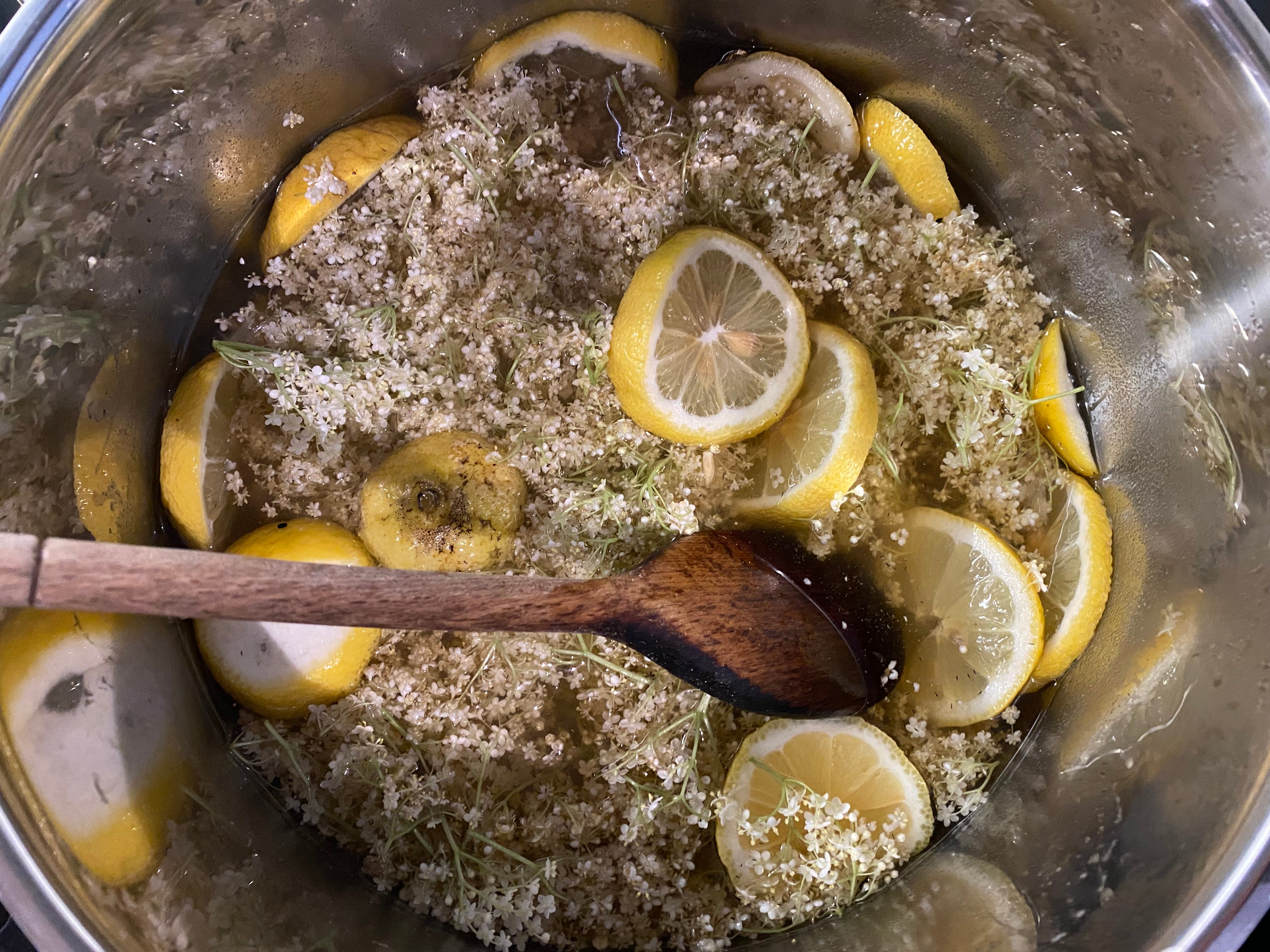
Stirring the magical mixture, 11 June 2026
Until next time.
With love, Imogen x
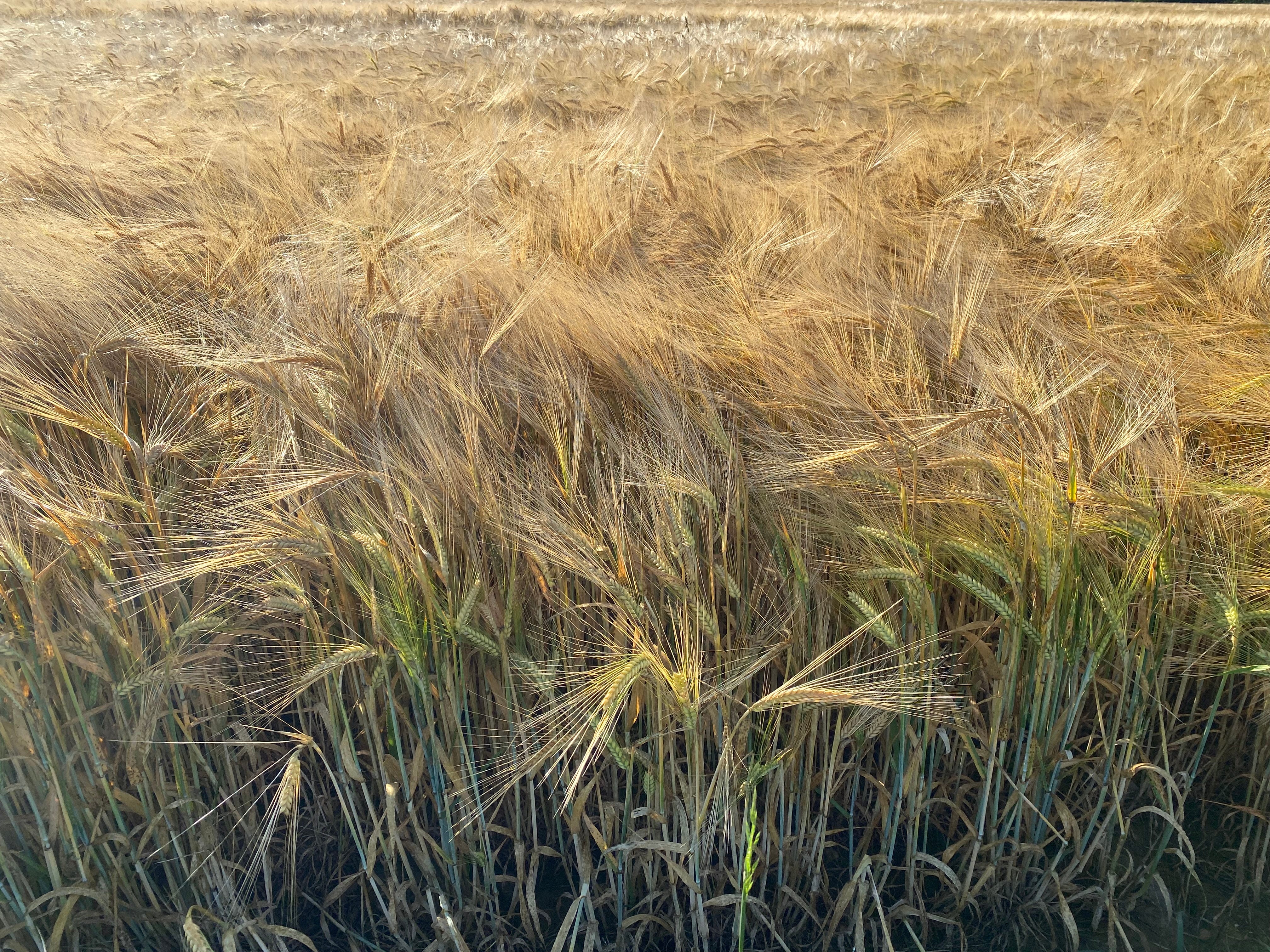
The barley glows gold in time for the Midsummer Solstice, 18 June 2026
Fabulous writing. I learn so much. Thanks Imogen, magical as always.xx