Of Tenderest Green
fair maids & rich harts

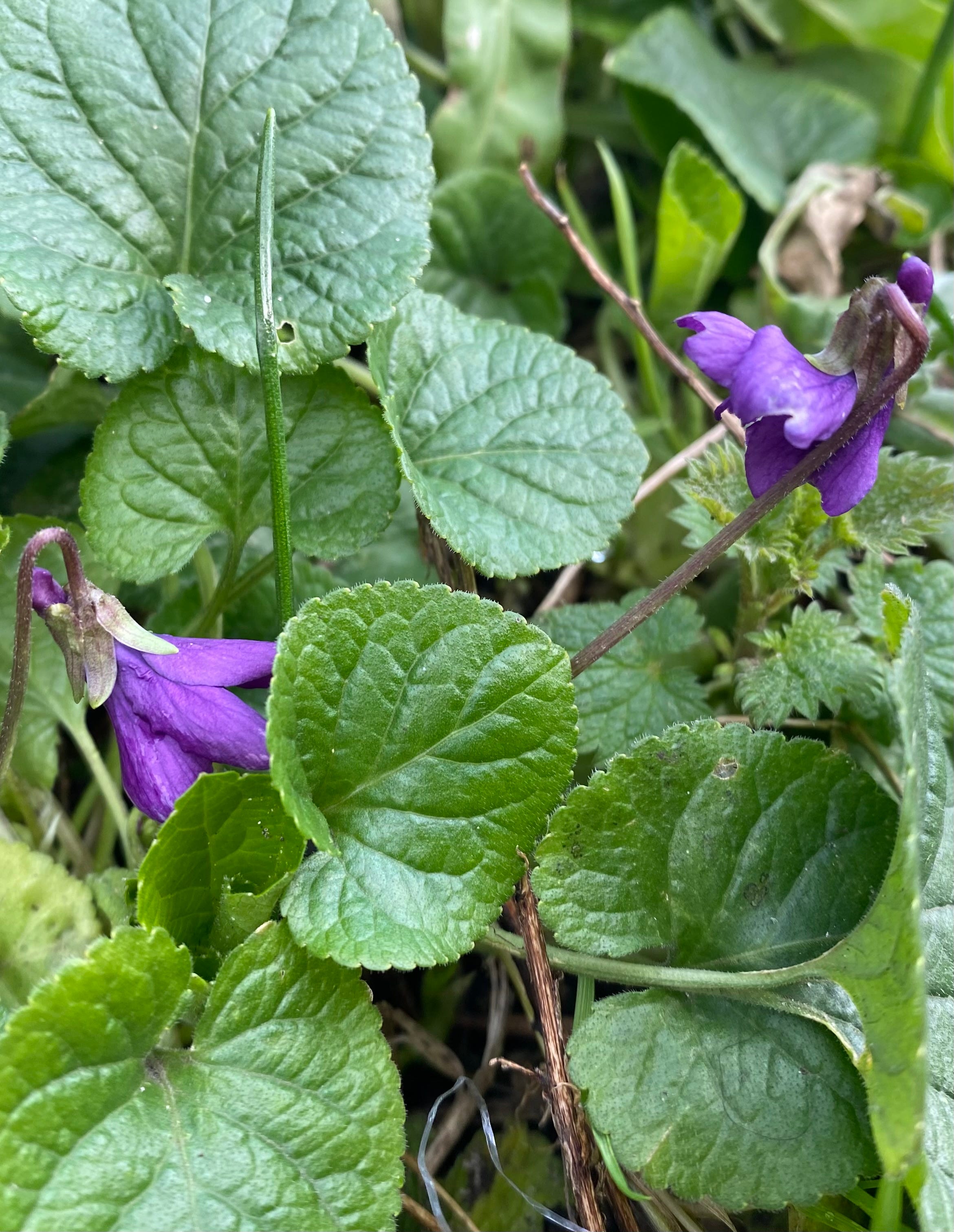
My first sighting of violets this year - just beyond the graveyard wall at St Margaret’s and All Saints’ church, Pakefield, Suffolk - 21 February 2026
Hello friends, and welcome to this cusp-of-spring (hopefully!) edition of Bracken & Wrack.
I’ve been my own worst enemy when it comes to tasting the season by getting out for daily walks along the lane. Several times lately, the morning has been quite sunny (well, not rainy anyway) and I’ve resolved to get out in the afternoon once I’ve finished this or that. Well, as you’ve probably guessed, by the time ‘later’ comes, the sky has darkened, a chill wind has whipped up and suddenly getting the wood burner lit and starting on the dinner seems a far more attractive option.
This morning, though, my determination has won the day and I’ve just got back from a little ramble down to the end of Crow Wood to see how watery it all is. Last week when I walked around the edge of the wood I was surprised to see how primeval the scene appeared, with fallen trees and bare branches reflected in a mass of shimmering flood water punctuated only by clumps of rush. That, of course, would have been have been completely normal each winter before humans started deepening and straightening water courses and constructing drainage channels, taming the wild out of valley bottoms.
Along the lane, the snowdrops were at their absolute glorious peak, spangling the muddy verge and forming a glistening processional way into Dancing Bear Wood. I always look for a particular hollow that I now know to be the site of an ancient rubbish dump, which becomes veiled in beauty each year by February Fair-maids.
The air smelled different, and I’m sure it wasn’t my imagination. There was a warmth, a swelling of buds, the rotten-sweet scent of last year’s compost holding its breath for the eruption of new life. It was, of course, intoxicating. And warmth through my black leggings and on my face too. Clumps of daffodils on the grassy lane-edge, not wild but a welcome gift for passers-by, were on the very cusp of opening their golden trumpets.
In Crow Wood, shafts of low sun set the myriad holly bushes a-sparkle and I wound my way along the springy track through one fairytale tunnel after another. At the back of the wood I stepped from one island of decaying oak leaves to another until I found myself staring at my own reflection in a rippling pool. And there, my own little life seemed to mingle with all the ages that have ever been.
The moment was broken by the quick movements of a squirrel bounding up an oak trunk, its tail spelling S .. S .. S. Then the retort of a woodpecker’s urgent tapping somewhere very close overhead. I craned my head for a glimpse, but its shape was hidden from me until the drumming stopped abruptly and I witnessed its zig-zag departure.
The woodland settled down again, gently incubating more signals of spring as I retraced my steps, lured home by the thought of the waiting coffee pot.
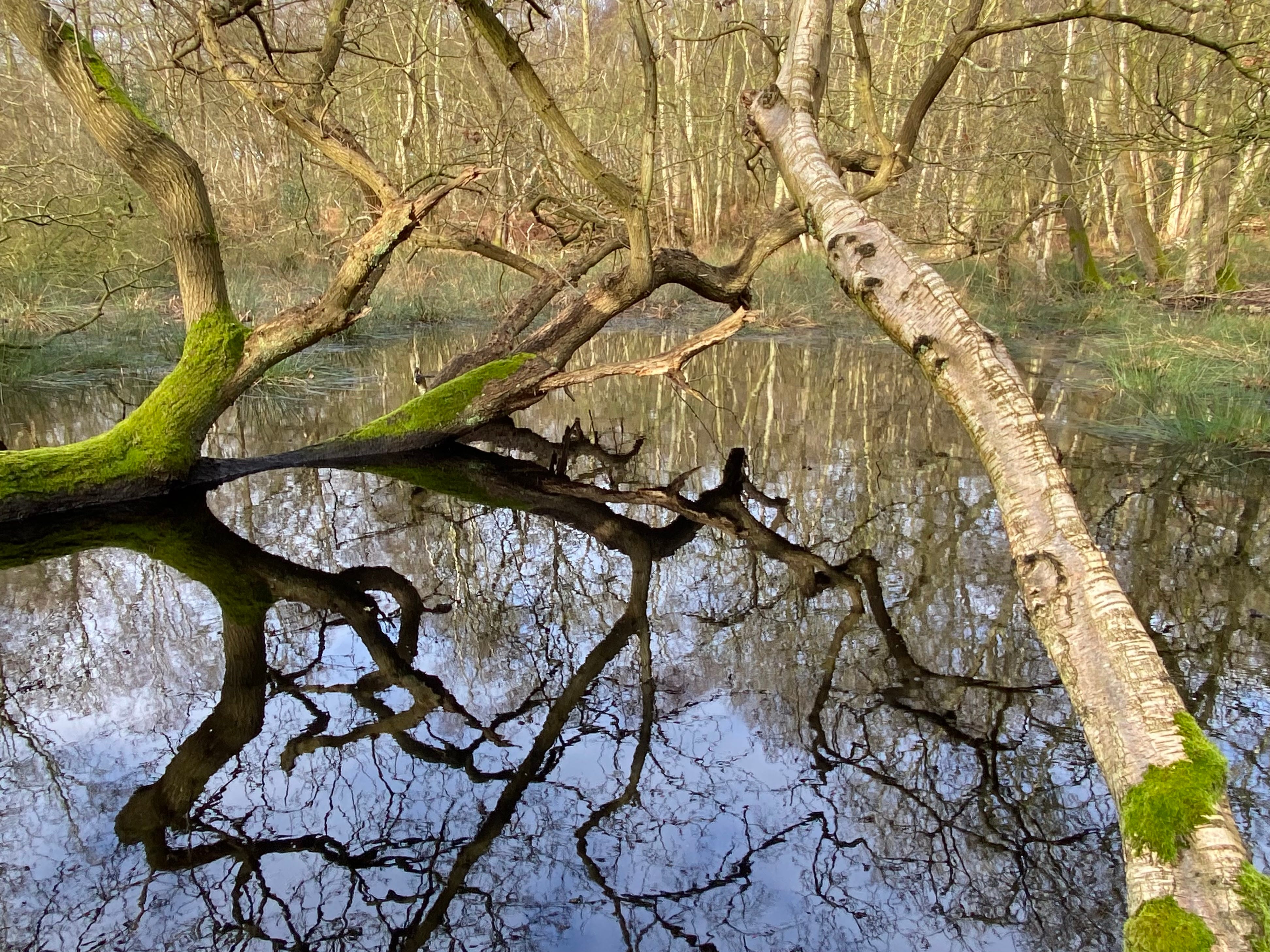
Layers of reflection in Crow Wood, 24 February 2026
I’ll be keeping each edition of Bracken & Wrack quite simple for a few months while big changes are afoot here at HQ. In fact, I’d value your opinion in the comments as to whether you’d prefer to see a short seasonal update twice a month or a longer one, similar to our regular gathering here, monthly either at new or full moon. Do let me know your preference, as that will also help me to plan going forward later in the year.
Now that there are so many more of us here, another thing I’d like to do is to find and dust off some of my favourite writings from the early days of Bracken & Wrack. I hope you’ll enjoy these seasonal snippets, either as old friends or something completely new to you.
For our paid community, I’ll continue the twice-monthly ‘between the moons’ offerings (usually a podcast, video or behind-the-scenes picture story) and longer term I’m also working on extra things we can do together in the membership, making it a place where we can get to know each other a little better. If you would like to upgrade your subscription (or just to buy me a coffee - link at the bottom of this newsletter) I would be thrilled!
So, with the above in mind, in this issue you’ll find:
Ancient Reflections in Crow Wood
Poetry by Katherine Mansfield and Rainer Maria Rilke
A Faint Spangling: veiled hints at an old old story
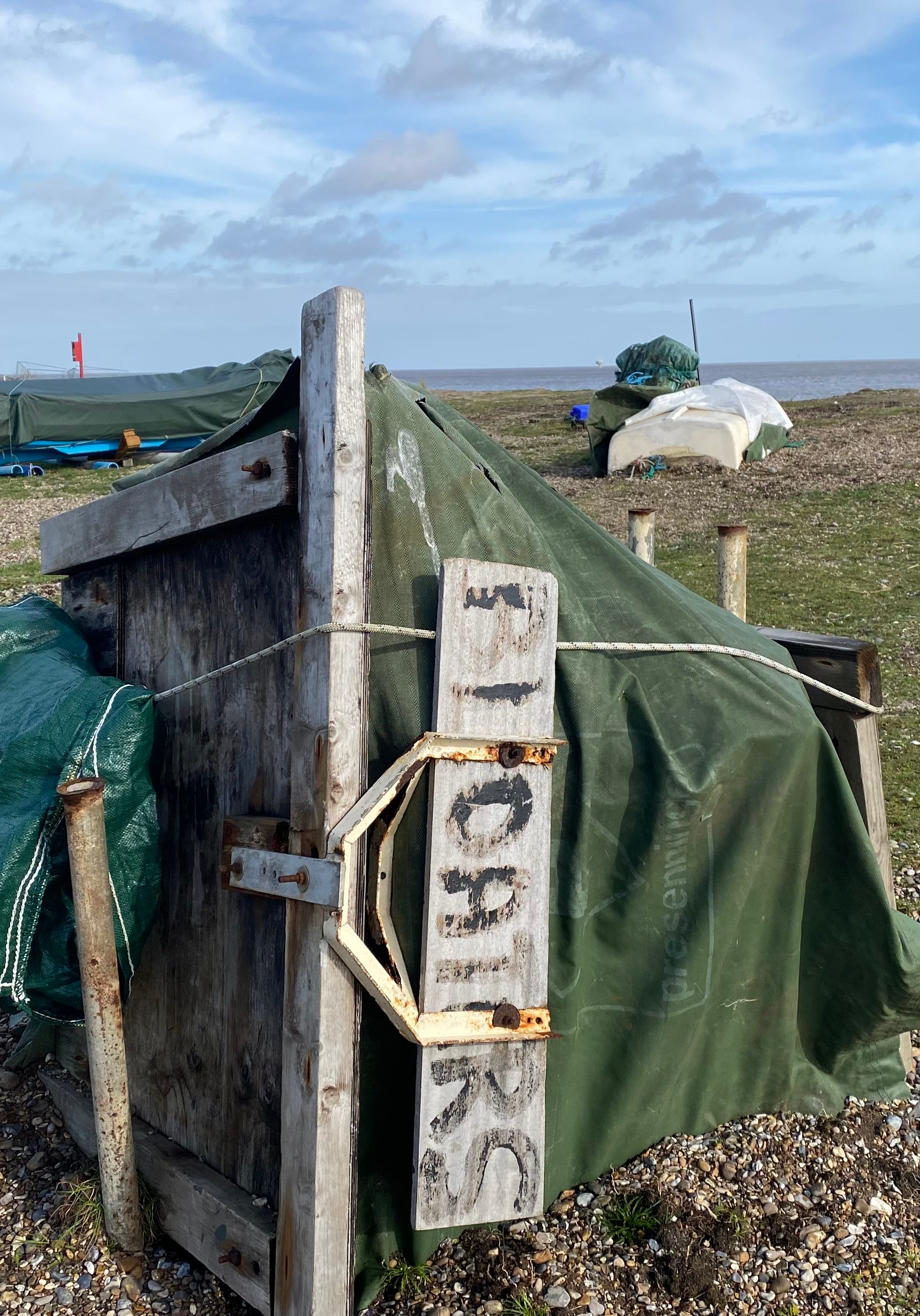
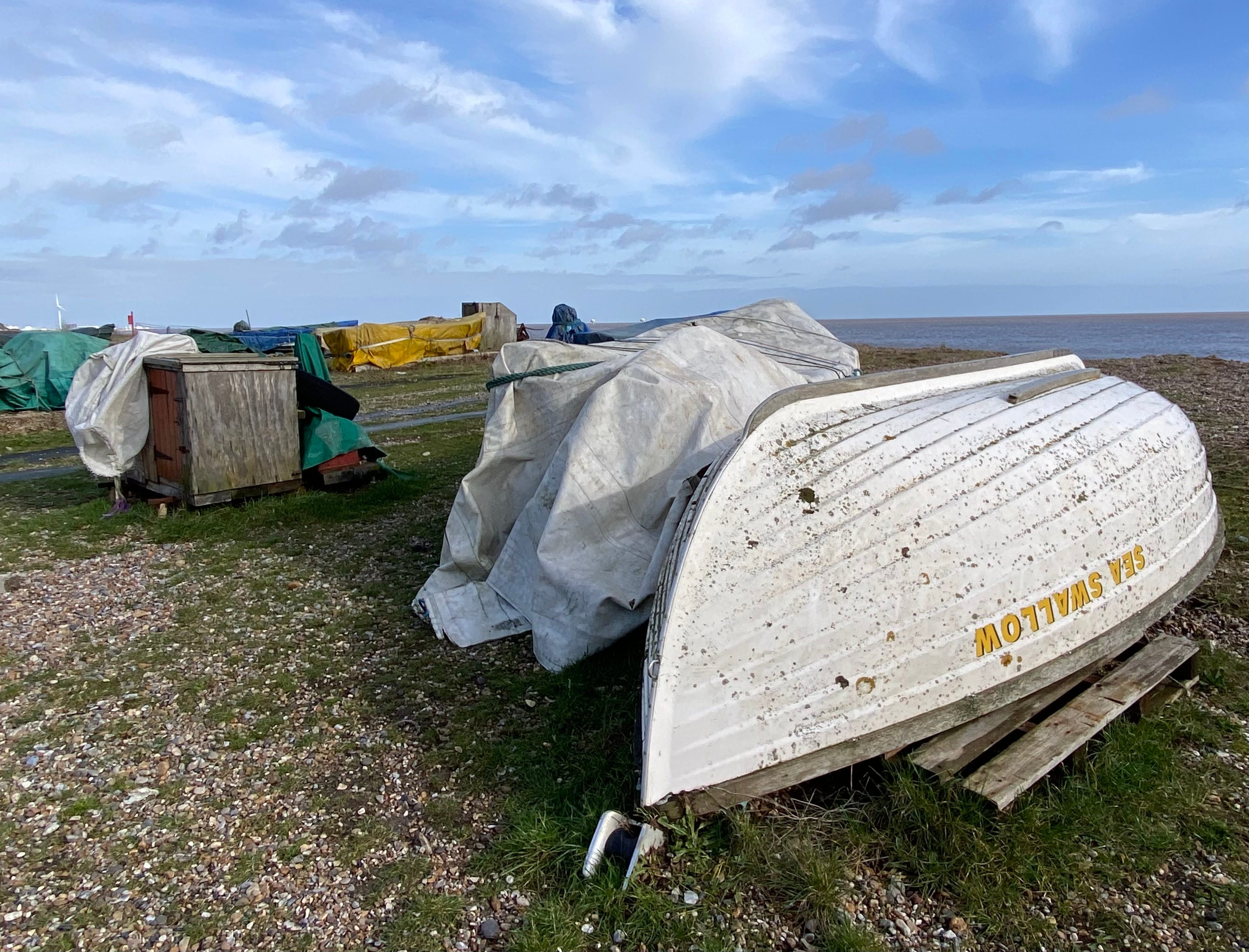
‘Bloaters’ - now that’s an olden days word - the fisherfolks’ glorious mess on the beach at Pakefield, Suffolk, 21 February 2026
Click here for an audio version of ‘Very Early Spring’:
The fields are snowbound no longer;
There are little blue lakes and flags of tenderest green.
The snow has been caught up into the sky —
So many white clouds — and the blue of the sky is cold.
Now the sun walks in the forest,
He touches the boughs and stems with his golden fingers;
They shiver, and wake from slumber.
Over the barren branches he shakes his yellow curls.
Yet is the forest full of the sound of tears ….
A wind dances over the fields.
Shrill and clear the sound of her waking laughter,
Yet the little blue lakes tremble
And the flags of tenderest green bend and quiver.
Katherine Mansfield, ‘Very Early Spring’
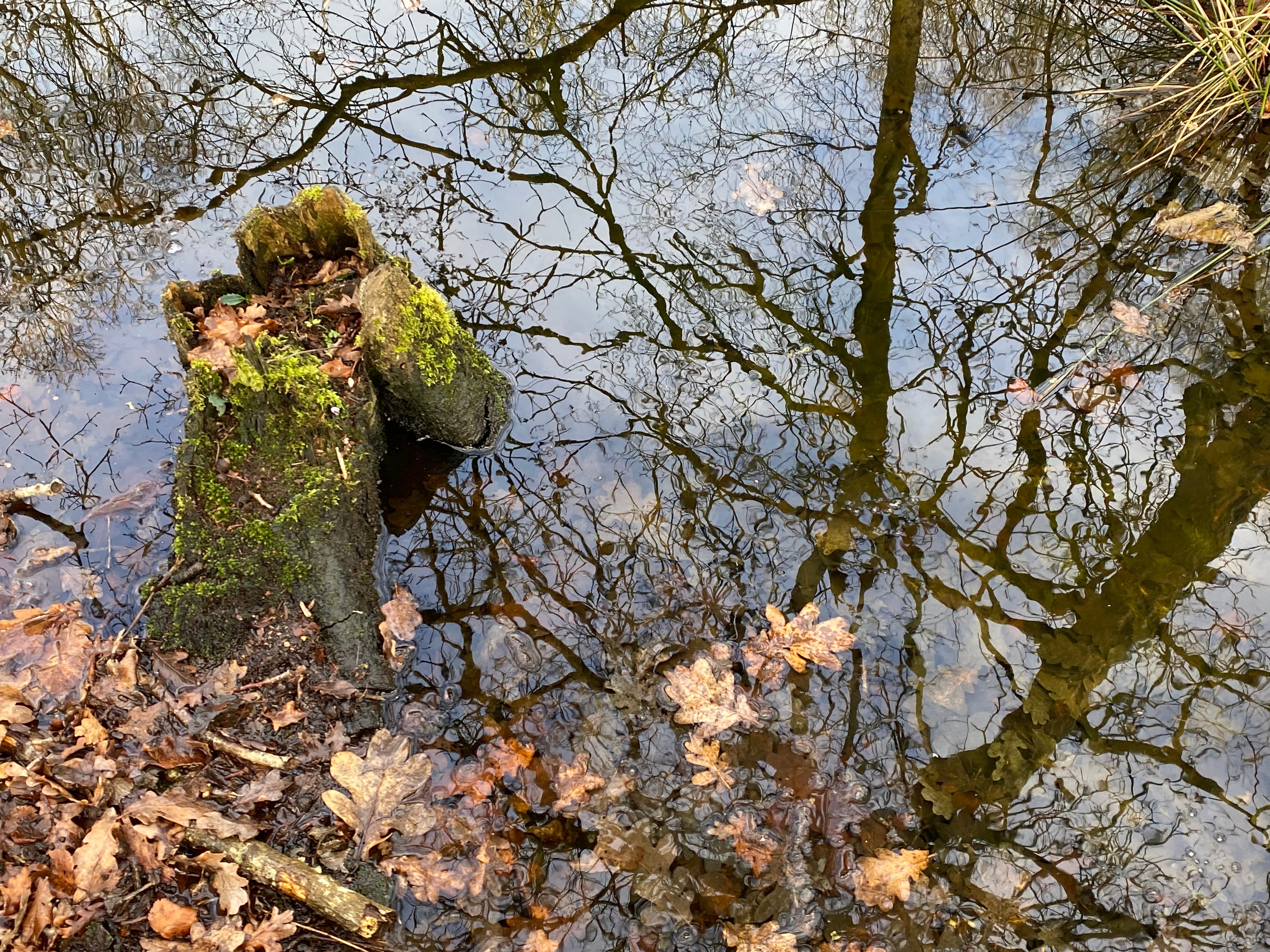
Winter gently turning to spring in Crow Wood, 24 February 2026
A FAINT SPANGLING: veiled hints at an old old story
Last Saturday I found myself in Lowestoft in Suffolk for parkrun. (For those not residing in a country with the parkrun obsession, this is a growing phenomenon whereby thousands of people gather each Saturday morning in various locations to run 5k. The whole thing is organised and run - excuse the pun - on an entirely voluntary basis. It’s addictive.)
As part of the joy of travelling all over the place to do different parkruns (and yes, there are lots of online challenges involving the ‘collection’ of locations beginning with specific letters of the alphabet, run times, dates and more, which some may also find addictive … ) a door is opened each weekend for a mini-adventure to emerge. And that was definitely the case at Lowestoft.
Perhaps it sounds far-fetched when I describe a walk to Pakefield, perhaps a mile along the coast from the Lowestoft car park where we’d left the van, as an ‘adventure’. But the wonder of such a walk is that you never know what will happen or what you’ll discover. Even if the route is already familiar to you, there’s always scope for enchantment.
In fact the adventure had begun on Friday evening with a picnic dinner in the van before falling asleep to the gentle patter of rain. This is often the way a weekend will begin. Hopefully not with rain, of course! But it’s a great way to ensure punctuality for the start of the event which, in England anyway, always begins at 9am.
Afterwards, it generally feels like coffee time and last Saturday was no exception. By this time the sky had more or less cleared and it was time to explore along the coastal path.
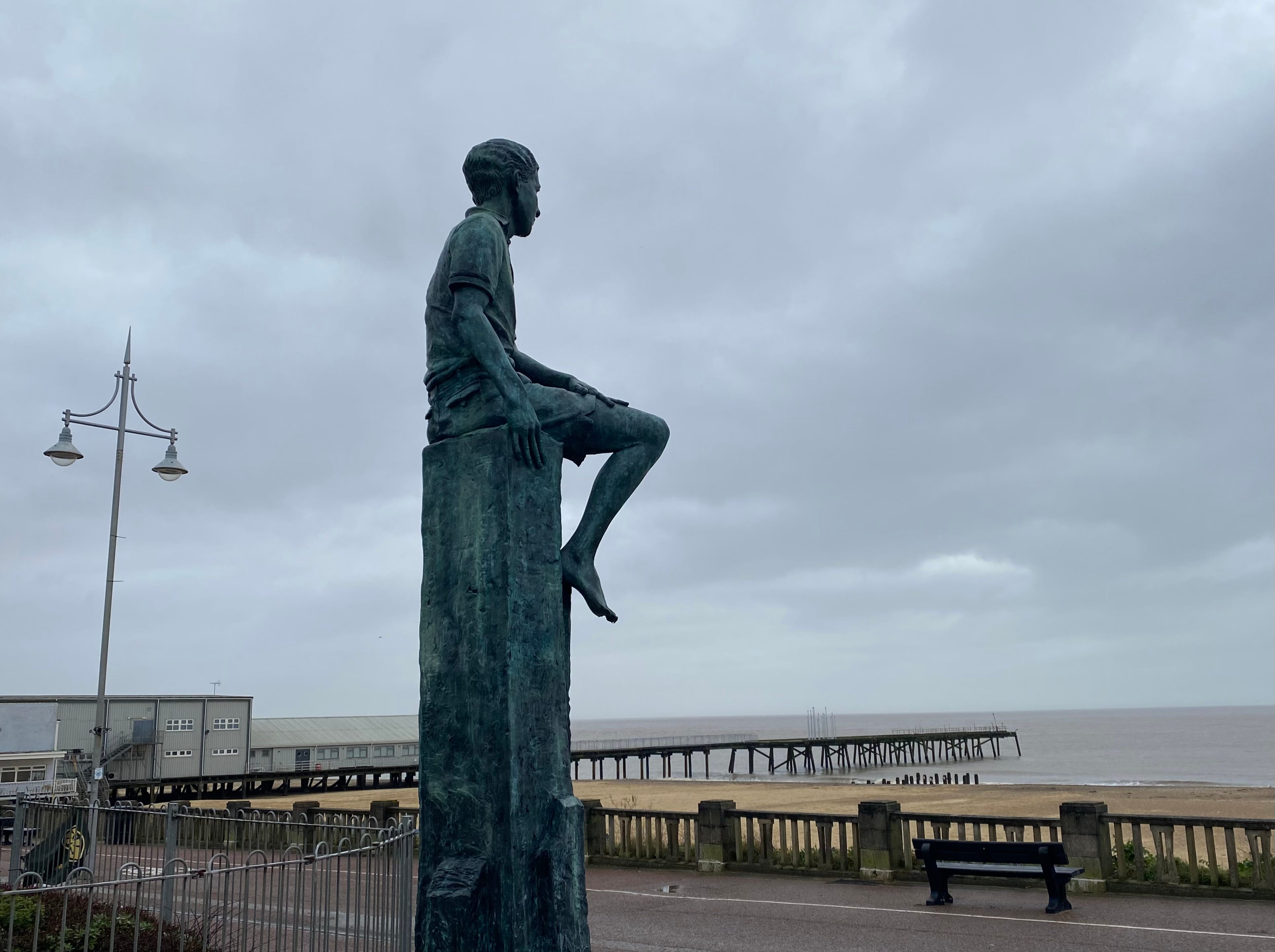
This statue shows Lowestoft-born composer Benjamin Britten as a teenager, gazing out to sea. The accompanying plaque explains its message, that of inspiring local young people to follow their dreams. With dedication and a strong goal, the young man’s pose implies, they can achieve whatever they desire. And the effect is somehow very touching.
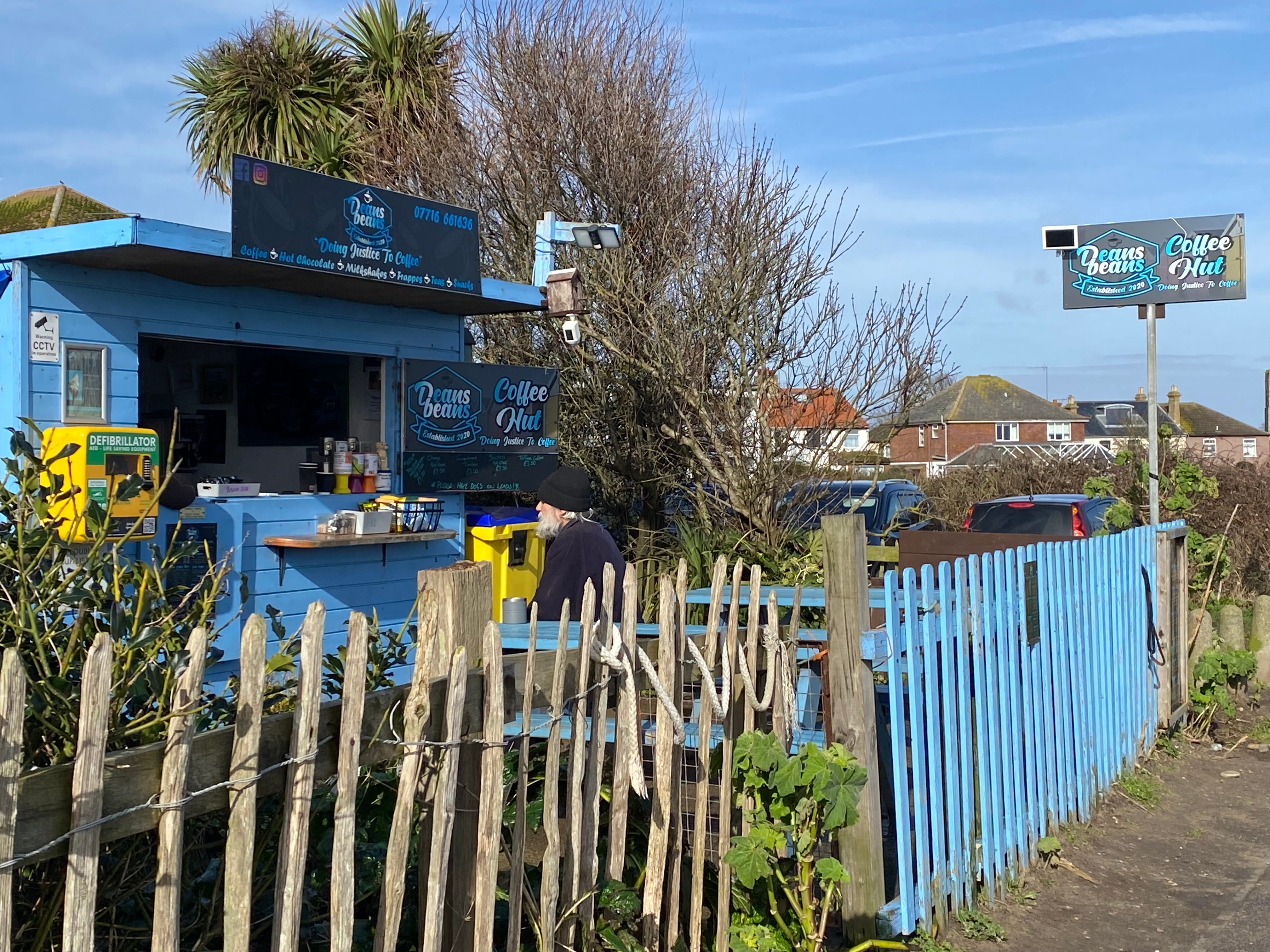
Walking on towards Pakefield the dwellings became more idiosyncratic and wild west - we even spotted an ancient railway carriage with a conservatory tacked onto the front and a station master’s office on the side - so there was plenty to look at. The call of the outside seating at this quirky beach cafe proved irresistible, especially as the sun had arrived at last. A hot chocolate and a virtuous conversation about the unpleasant ways of the TV licensing authorities later, and we were on the path again.
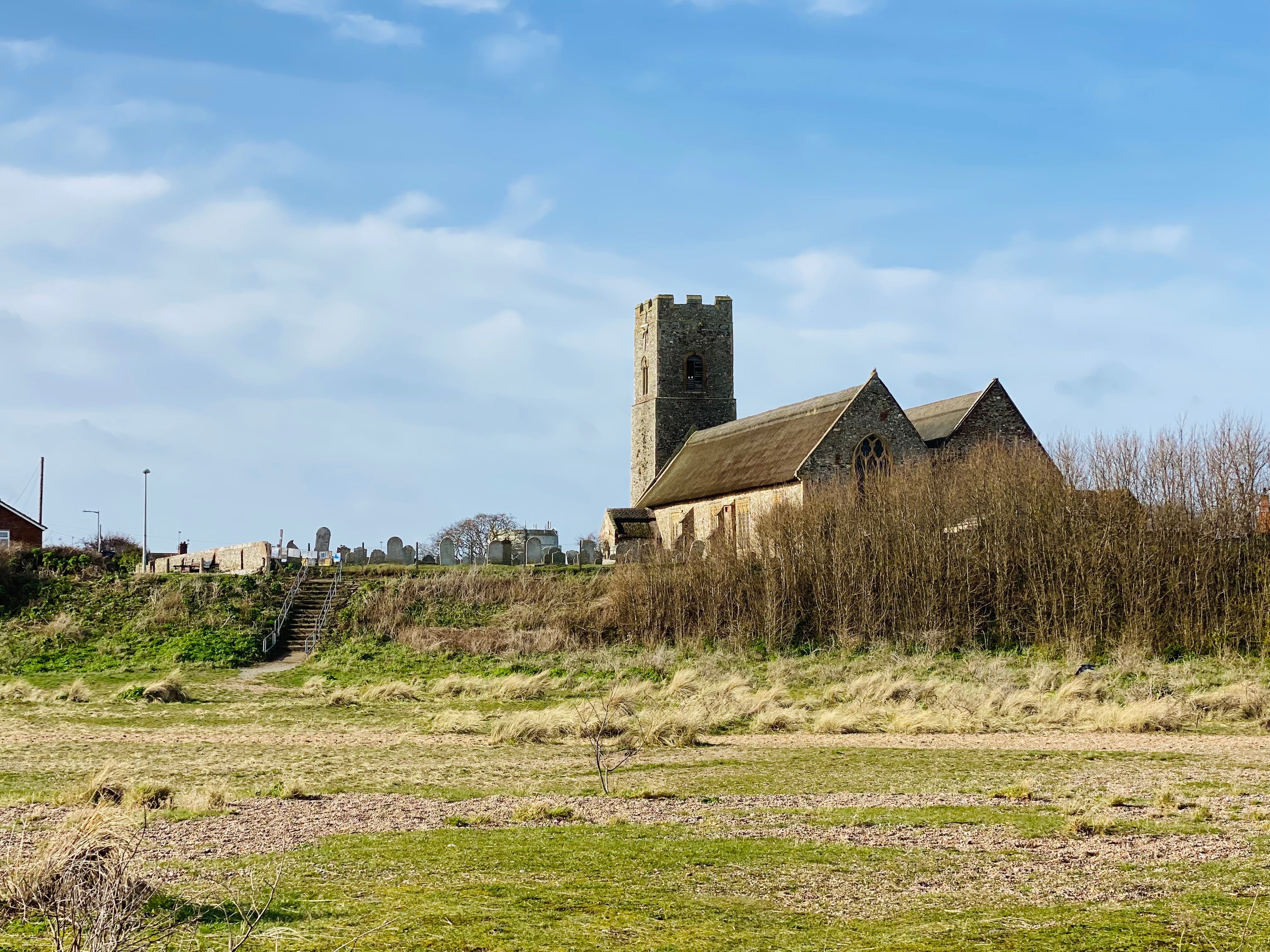
A little further along, we came upon Pakefield Church, which must be one of the most unusual I’ve ever seen. Possibly unique. Well, I say ‘church’ but in fact here we have two conjoined churches built side by side and sharing a single tower. St Mary’s and All Saints’ were built by two medieval lords of the manor who both wanted the spiritual benefits associated with such a foundation, and this building - now opened up into one wide space - is the result.
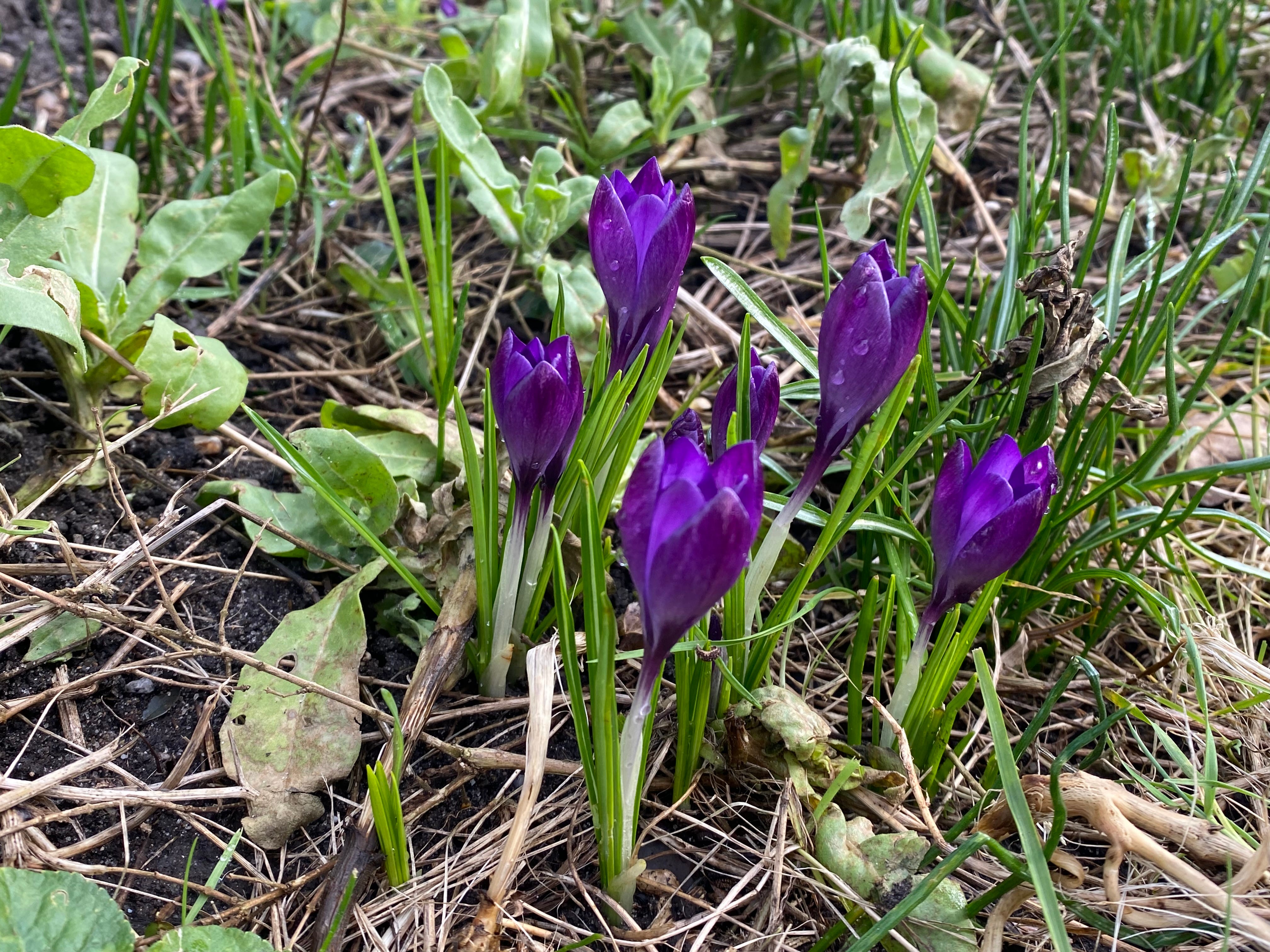
With their beautiful chalice-shaped blooms, these purple crocuses nestling alongside the churchyard wall were a perfect reminder that spring is on its way. Meanwhile over the wall among the lichened gravestones, four sheep munched contentedly. Three of these were horned, slight and earth coloured, and the other was pale, woolly and massive in comparison. So immersed in their never-ending meal were they that they scarcely looked up when visitors approached and exclaimed at their presence. I heard a local explaining to another couple that another big white sheep, Rodney, had sadly passed away in recent months.
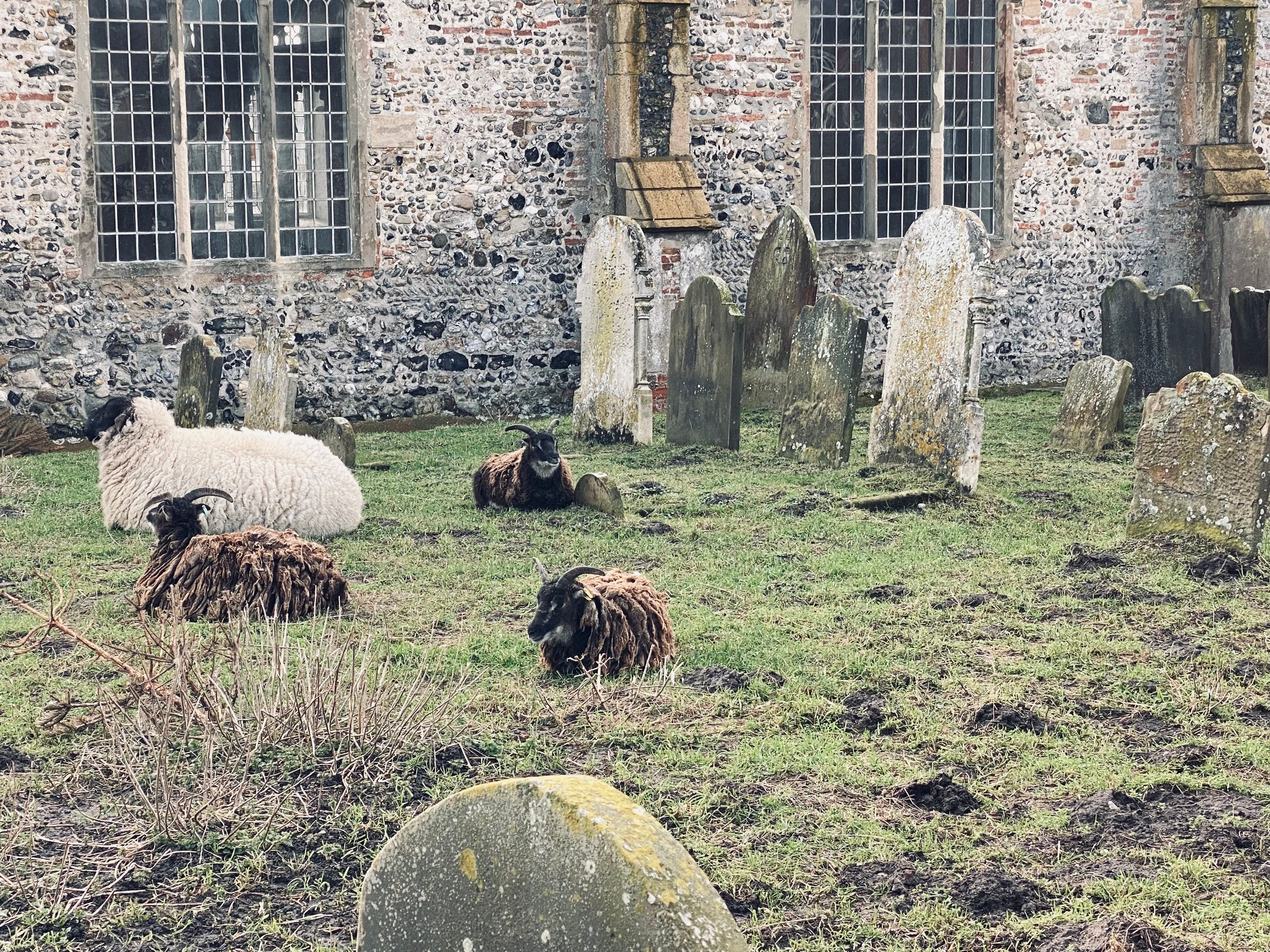
Last Saturday the ancient building was bustling but hushed while the parishioners held a ‘quiet day’ for contemplation. Nonetheless, the vicar greeted us warmly and she told us we were welcome to look around, so we did.
Strangely, although the wall dividing the two churches was taken down some time before the mid eighteenth century, each retains its own nave, chancel and altar. In front of the altar of St Margaret’s lies a grave slab recording the death in 1748 of Philip Richardson, the last man to be separately vicar to both of the churches.
The rood screens extending across both naves were one of my favourite things about the churches. Although none of the scratched medieval painted saints that I love were visible, the panel colours are absolutely beautiful. Timeworn layers that could never be reproduced, a faint spangling of stencilled patterns - diaper work - slipped in between here and there. Veiled hints at the story of this church wherever you cared to trace a finger. And speaking of touch, if you visit I defy you not to reach for the deeply carved tracery arches at the top of each panel. These too have subtle residues of what I guess to be original colour and honestly my heart could not have been happier to drink them in.
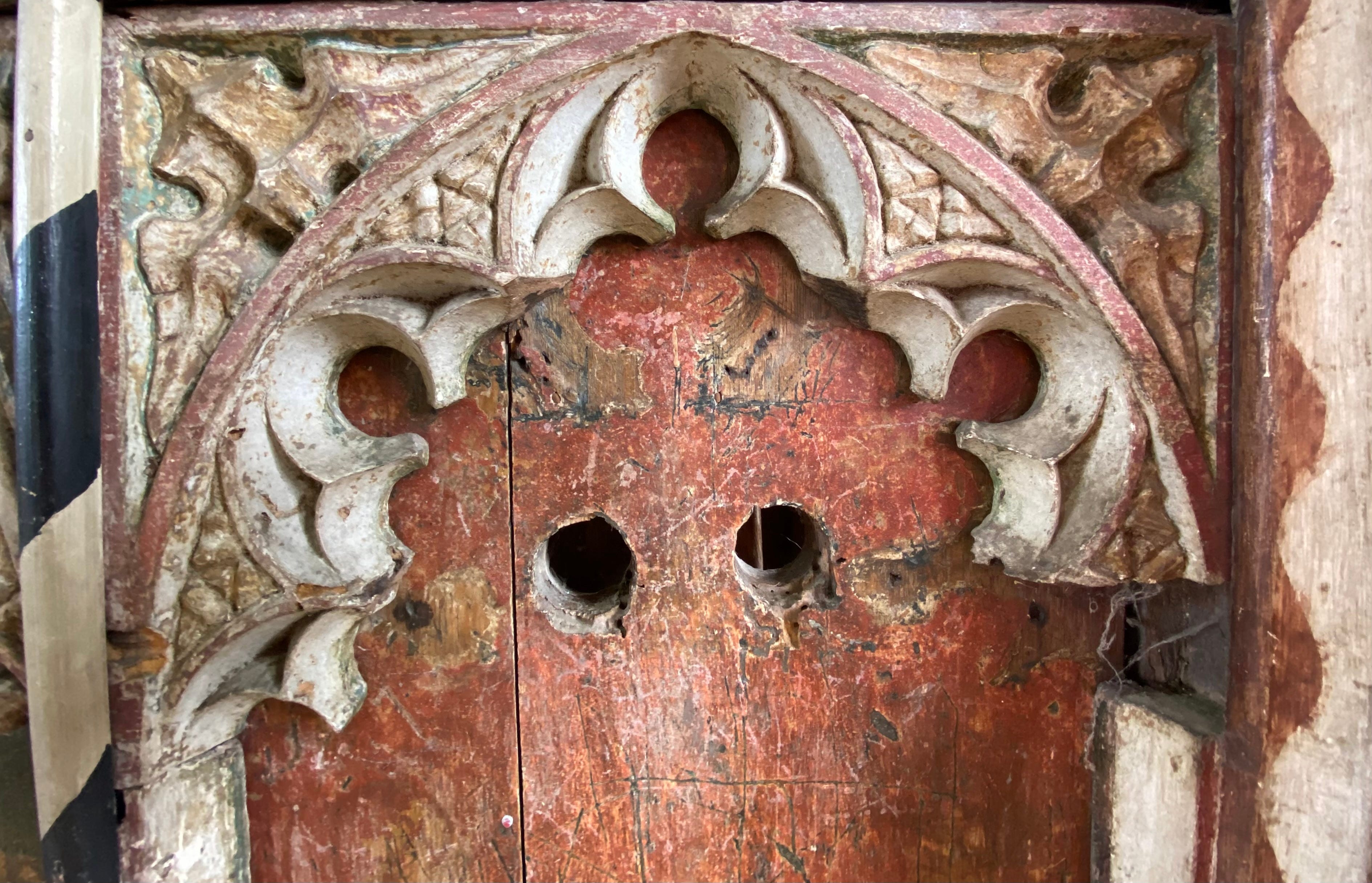
I thought I knew the purpose of these holes in the panelling, but it turns out that there’s no consensus. I had always been puzzled by their position so low down on the screen, when I’d read that holes would have been pierced to allow medieval parishioners to see the raising of the Host during Mass. After all, there are high open sections above the bottom panels, and surely people could just look through those?
One school of thought is that side altars against the panels kept worshippers at a distance from the screen - although these would be pretty much the right height for mice if the holes were above them - and another, that they were placed to give a sight line for people kneeling before them, which seems more plausible. Anyway, there they still are today for us to run a finger around and feel a connection with our centuries’ old ancestors.
When you read a little more about Pakefield Church though, you discover pieces of its story that have been woven even within living memory. As Simon Knott tells us on his Suffolk Churches website, if you had come this way before the Second World War you would have seen the only surviving Lenten veil pulley in all England. This was a fifteenth century device for drawing the Lenten curtain across the width of the nave, to be pulled dramatically aside at the Easter vigil. The pulley gets an enthusiastic mention in Munro Cautley's 1937 Suffolk Churches and their Treasures, but sadly on a night in April 1941 Lowestoft suffered a serious bombing raid. All Saints’ and St Margaret’s church sustained a direct hit, and was more or less gutted, destroying the unique survival entirely.
The only thing my companion remembered about this church before we went in was that one of the pillars held a scratched witch mark in the shape of a daisy wheel. These markings - medieval graffiti - probably don’t really have much to do with witches but the term has caught on, probably for its shock value. Also known as ‘compass-drawn’ designs, these petalled symbols within a circle typically are left unfinished with one open edge. The reasoning is thought to have been that any evil spirits or bad fortune that might try to trace over the lines and gain power would literally be left hanging, thereby becoming confused and giving up the attempt.
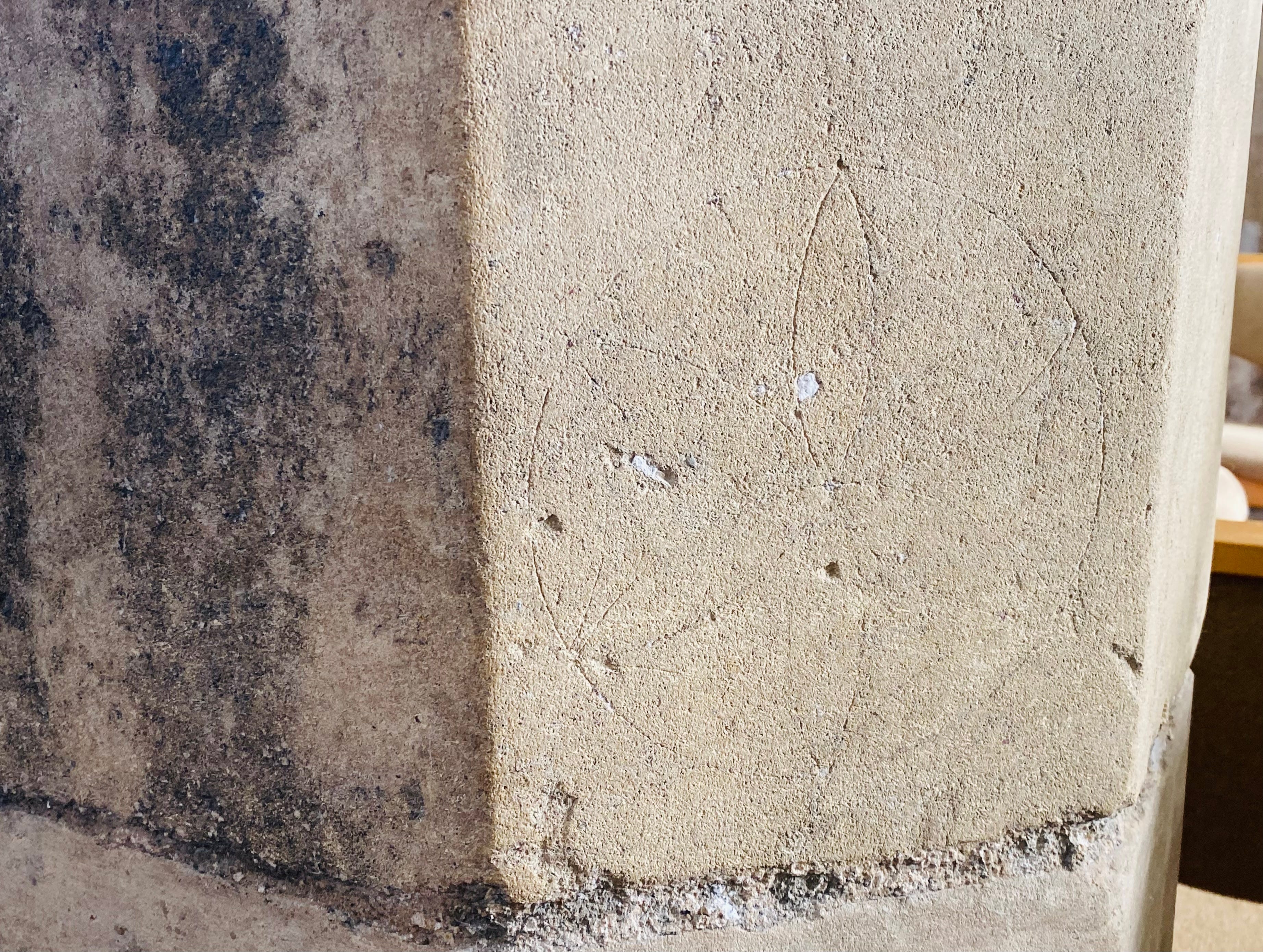
Faint but unmistakeable, the compass-drawn daisy wheel scratched into one of the pillars in Pakefield Church, Suffolk.
Often these wheels - and other apotropaic (protective) markings - are found close to the baptismal font, presumably to shield vulnerable babies from a last attempt by the devil to claim them as his own. Sure enough, we discovered that All Saints’ font is not in its original position - once it stood against that very pillar!
And what a beautiful medieval font it is. Dripping with carved angels, lions and other beings, still dancing with life despite every face having been hacked away by Cromwell’s men. Most of the images were familiar, but one of them I’d never seen before: two of the eight panels featured a kneeling stag with a crown or coronet around its neck.
Here lies proof that the font was crafted during the reign of King Richard II, in other words before 1399. The stag or hart is his emblem - the sort of play on a name known as a rebus - as the name Richard can be broken down into the elements ‘rich hart’. Town signs and coats of arms often incorporate this kind of word game.
Can you think of a rebus for your own name? I’d love to hear in the comments!
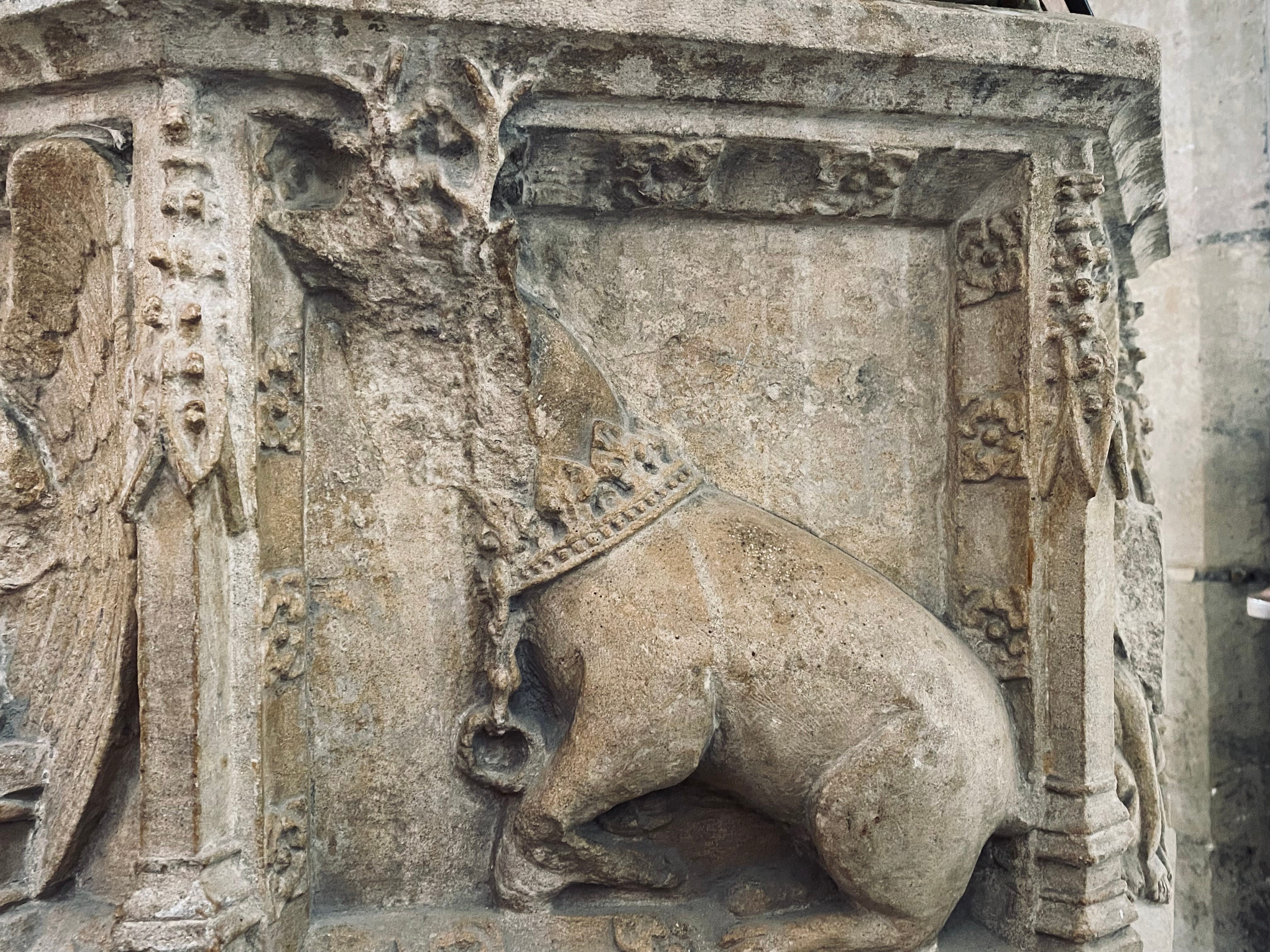
Stag with a crown around its neck - a ‘Rich Hart’ for King Richard II. Although mutilated the antlers are clear enough :-) Pakefield Church, Suffolk, 21 February 2026
Click here for an audio version of this extract from ‘The Book of Pilgrimage’.
In the deep nights I dig for you, O Treasure!
To seek you over the wide world I roam,
For all abundance is but meagre measure
Of your bright beauty which is yet to come.
Over the road to you the leaves are blowing,
Few follow it, the way is long and steep.
You dwell in solitude — Oh, does your glowing
Heart in some far off valley lie asleep?
My bloody hands, with digging bruised, I’ve lifted,
Spread like a tree I stretch them in the air
To find you before day to night has drifted;
I reach out into space to seek you there ...
Then, as though with a swift impatient gesture,
Flashing from distant stars on sweeping wing,
You come, and over earth a magic vesture
Steals gently as the rain falls in the spring.
Rainer Maria Rilke, ‘The Book of Pilgrimage’ (extract)
Until next time,
With love, Imogen x
PS: As mentioned earlier, if you enjoy Bracken & Wrack and feel you would like to buy me a coffee, I would be incredibly grateful. Thank you! Here is the link
I honestly don’t mind if these writings are monthly or fortnightly for the moment, whatever it takes to keep you here writing 🫶🏻 as long as there is a recipe or two! 👩🏻🍳
I like the idea of doing things together as a paid subscriber, getting to know others and sharing.
You know how much your own sharing keeps me connected 💓🌿
I love your posts and this was particularly interesting. The flowers appearing, Pakefield church, the daisy wheel what sights to see!