The Lurking Spring
dancing hares & wolfish gold

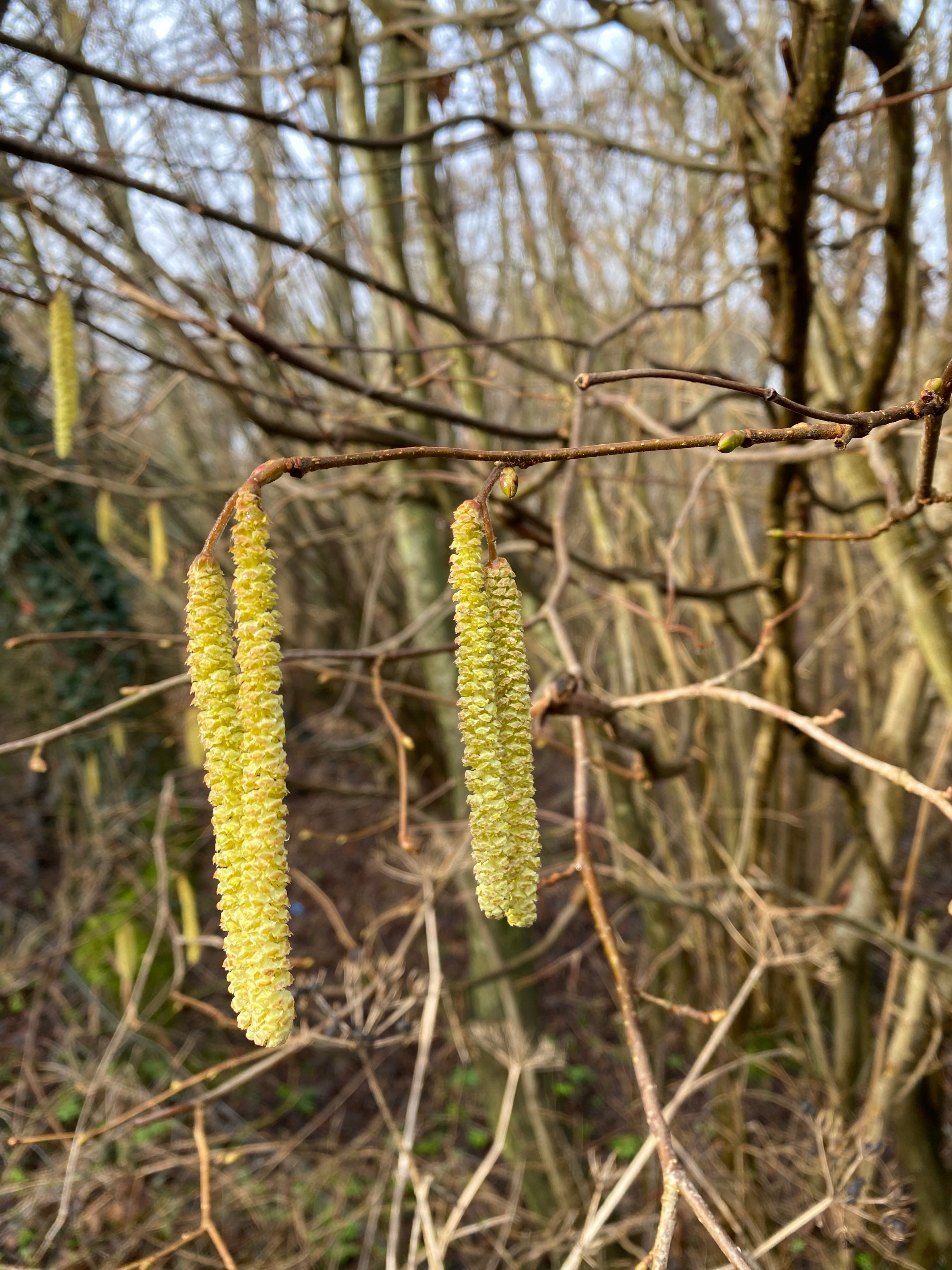
Catkins by the Alder Carr, 28 January 2026
Today I saw the catkins blow
Altho’ the winds are white with snow;While throstles sang, ‘The sun is good’
They waved their banners in the wood.They come to greet the lurking Spring
As messengers from Winter’s King.And thus they wave while Winter reigns,
While his cold grip still holds the plains.Oh, tho’ the hills are white with snow,
Today I saw the catkins blow!
Dorothy Una Ratcliffe, ‘February’
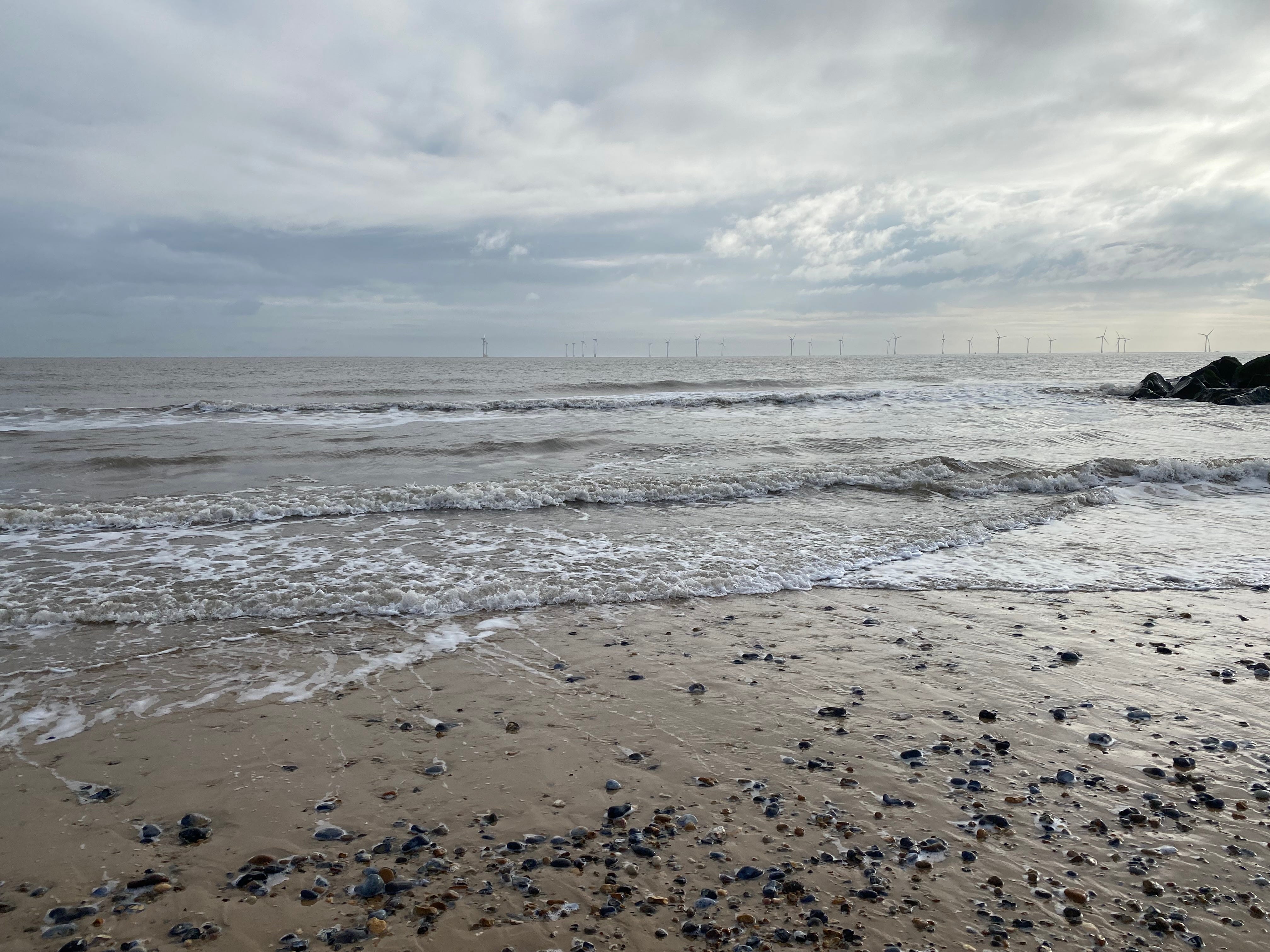
Wintry colours on the shoreline at Caister, Norfolk, 8 February 2026
Hello, and a warm welcome to this damp and chilly February edition of Bracken & Wrack!
While I love to find the joys in every month and in every moon, I can see why many people (in the Northern Hemisphere, that is) struggle with February. Winter seems to have gone on for a very long time, and there’s a general feeling that it has outstayed its welcome somewhat. Today has been a grey and drizzly one, and although I planned to take a misty walk along the lane, the mizzle that got into my eyes even while popping out to the compost heap was enough to keep me admiring that wintry palette through the bedroom window instead.
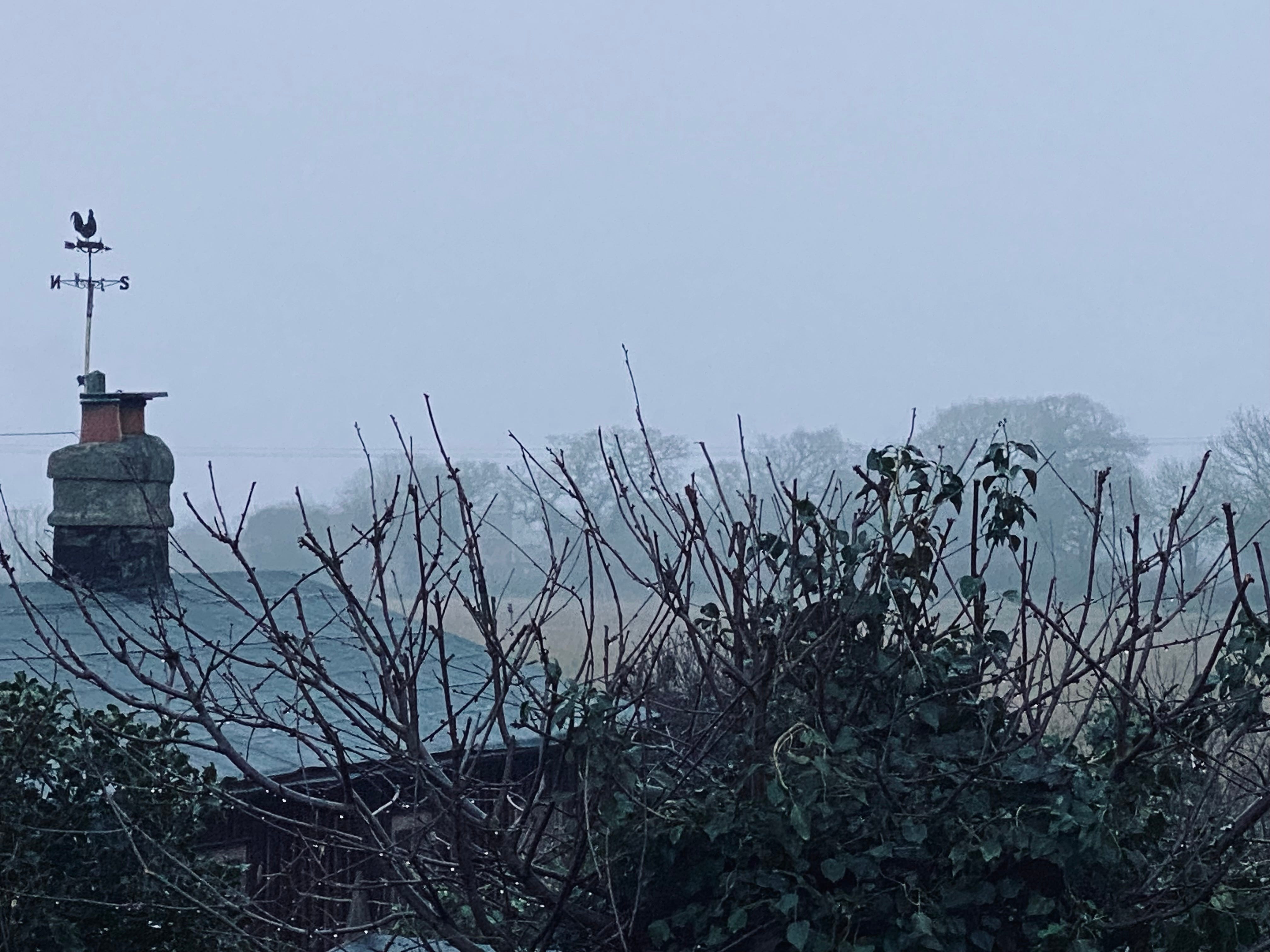
Through the bedroom window, 10 February 2026
Perhaps because of the feelings that this month evokes, this edition of Bracken & Wrack seems to have taken February as its overall theme. Within it, you’ll find:
A Feast of White: how I see February
Little Black Month: the view from the vardo
Poetry by Hilary Llewellyn-Williams & Dorothy Una Ratcliffe
Wassail: attending to the apple trees
Quite Wild: the rites of Lupercalia
Blessings in my Life: a list for Lupercalia
Saint Valentine & The Wolf: a recipe for Lupercalia
A FEAST OF WHITE: how I see February
Earlier I found myself reflecting that, if I were to assign a colour to each month, February would actually be decidedly white. That’s not just because we quite often get snowfall in February, or even because of the ever-increasing numbers of opened snowdrops in Dancing Bear Wood. For one thing, 1 February is St Brigid’s Day, and she is strongly linked with the dairy so we have the whiteness of milk along with the nodding snowdrops that are her flower and the gleam of a swan’s wing. Yes, swans are also associated with Brigid.
I have written before about the White Feast I once prepared for old family friends who happened to visit on 1 February. It was fun trying to design two courses that were full of flavour despite that constraint of everything being white. I remember that I did allow myself a little touch of green in homage to the tips of snowdrop petals, but this was decades ago and I’ve forgotten the actual dishes that comprised the Feast. Still, in some years when I’ve thought to do it, I’ve made something white for St Brigid’s Day or Candlemas (which I also envision in white) even if it’s just a version of cauliflower soup.
Then there are other blooms that unfurl at this time of year, braving the short days and cold nights. The flowers of the winter honeysuckle have spangled the wall for weeks now, and the first white hellebore has opened. Hellebore flowers always droop towards the earth, hiding their beauty until you tip one up into the palm of your hand to marvel at its perfection. That single white hellebore, given its proper attention, reveals a gloriously freckled interior marked with the pale green that I love.
But one of my very favourites came as a complete surprise. When I planted the tiny forest in the cottage garden, I acquired all those trees on a shoestring by choosing bundles of spindly saplings intended for the creation of native hedging. These were about a metre tall and mostly came in fives, and so it was that the tiny forest included five baby wild pear trees. Now, the name ‘wild pear’ somehow has a romantic feel, but most of the year there’s nothing romantic about these trees. They don’t bear pears, and even if they did, the fruits would be tiny and inedible, in no way resembling our domestic varieties. However, the thing that makes them terminally unapproachable is that each trunk and branch is clad in thorns so long, strong and sharp that they make blackthorn spines look positively friendly.
With the trees planted so close together (I didn’t really have a clue what I was doing) those wild pears were an absolute nightmare to manoeuvre around, so I decided to cut my losses and dig them up or cut them down before they got their feet too far under the table. And my goodness, even at a year old they were resistant. One of them had already grown bigger than the other four and its trunk had expanded at an alarming rate. It was not going to be removed without a fight. It was February, a good time to deal with trees while the sap is down. February - and that tree was clothed in the most glorious white blossom.
I didn’t have the heart even to try to get rid of that tree. How could I, with such beauty spangling every twig?
Fast forward a handful of years, and wild pear blossom still decorates my tiny forest in February. It’s the most uplifting sight you can imagine, with the exception perhaps of the joyous dance of hazel catkins that wave between the branches of five hazel trees.
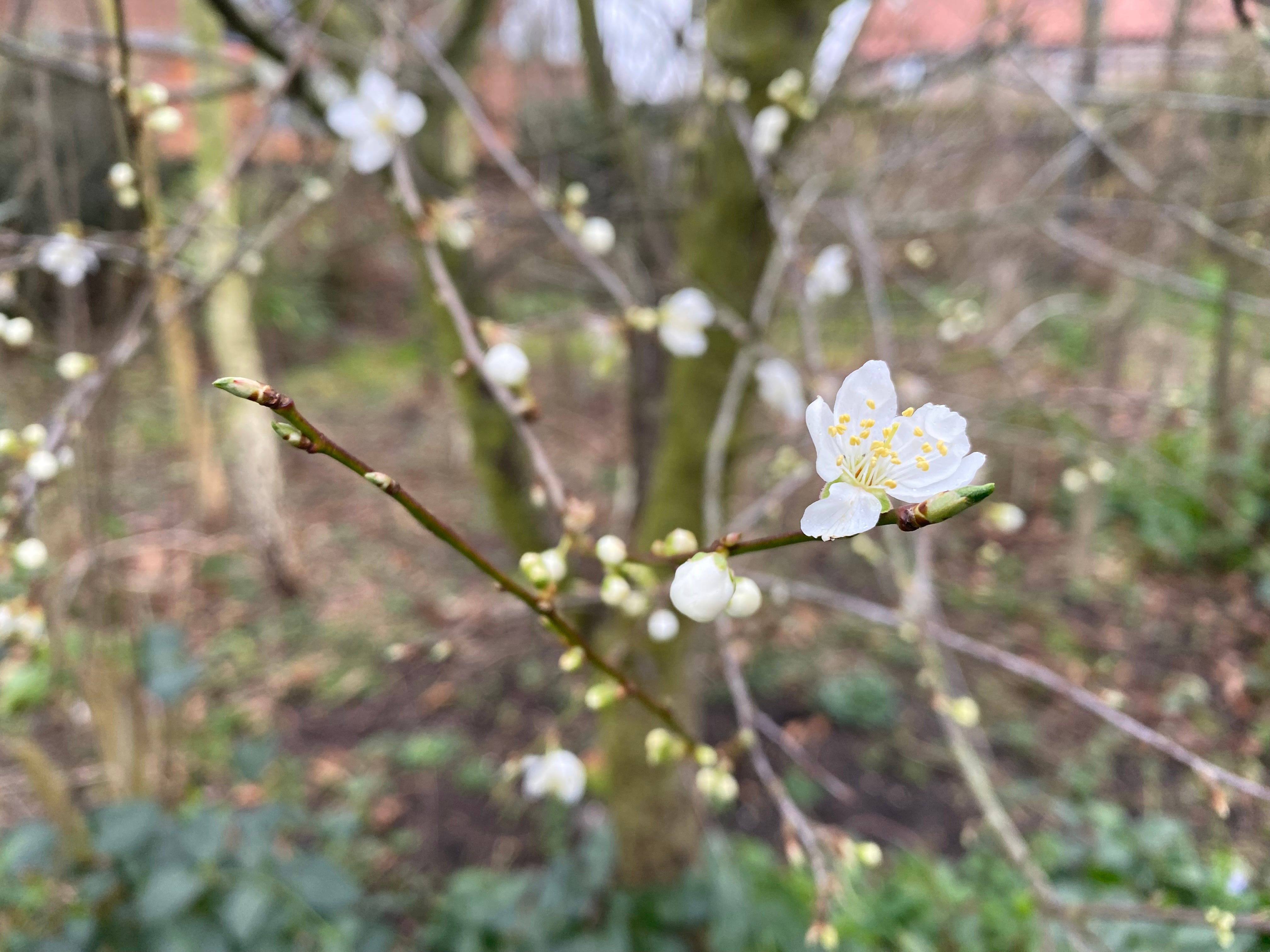
Wild pear blossom in the tiny forest, 10 February 2026
LITTLE BLACK MONTH: the view from the vardo
I may think of February as milk-white, but the Romany view is completely different. Their name for the month is bita kaulo munthos, which means ‘little black month’. I suppose, looking again at the leaden skies over the lane, this makes sense as it’s the last of those dark winter months and short hours of daylight. Another Romany name for February is kaulay staur kurkay, meaning ‘dark four weeks’. At the time these names were in widespread use, most gypsies lived in tents rather than the vardos I mentioned above, so the gloom and cold of a short February day would have been keenly felt.
With February in its guise as the ‘little black month’ I feel very lucky to be able to stave off the dark and chill each evening. 10 February 2026
Click here for an audio of the full poem:
From the rim of the east
from the sun’s house
a heron
follows his heart to the river
with slow, strong wings.
Eggs in the wet reeds,
the alder roots. On a hill
hares dance; on screaming swings
children fly up, laughing.
His wings beat for love
for the pool where his love waits.
The sun’s level gaze, the brave
white-faced snowdrops
sharp in the dark under a hedge-bank;
everywhere there are eyes, eyes.
Wings in the bare twigs, everywhere,
and green blazing golden blades
pushing and prodding, unfolding,
breaking and budding, pale flooding
pools in the dusk, black tips
swelling against the last
of the light, and dawn’s first light
due east, in the sun’s house.
Hilary Llewellyn-Williams, ‘From the East, Where the Sun Rises’ (extract), in Hummadruz (Seren Publishing)
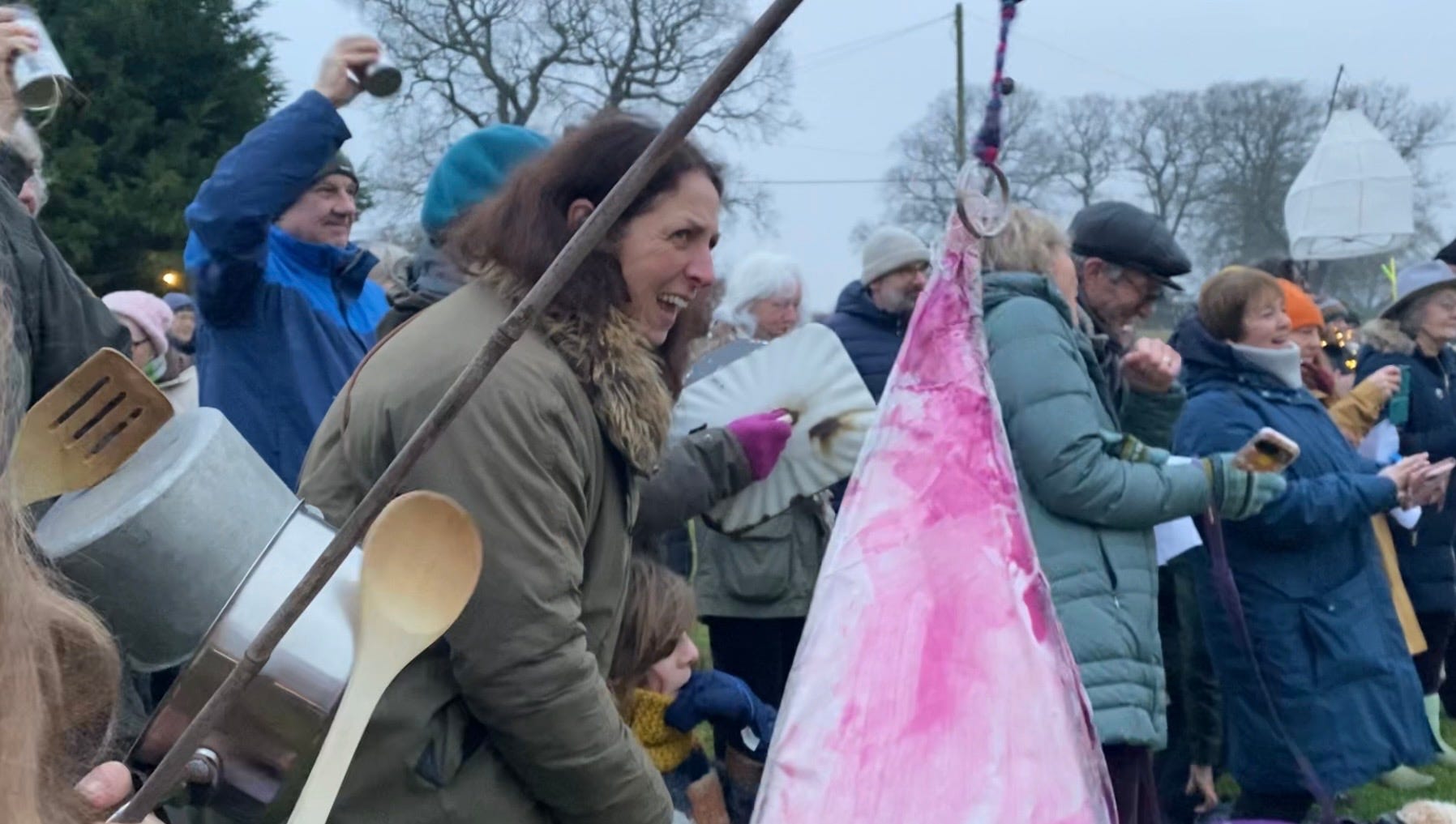
Wassail at the Community Orchard, Itteringham, Norfolk, 25 January 2026
WASSAIL: attending to the apple trees
Just in time, I slipped down from my seat and slammed the van door as the first dancers stepped and twirled past. At 4pm it was not yet quite dusk, but the day had been grey and chill, and the pewter light made white shirts gleam under brocade waistcoats. Ribbons flew, bells jangled, sticks beat time.
Behind trailed a procession of well-wrapped villagers bearing pots, pans and wooden spoons. Some held aloft paper lanterns whose wicker skeletons bulged through delicately stretched skins.
But the overriding sound was the mass jingling of hundreds of little brass bells as the dancers twisted this way and that, leading their motley band of followers who ranged in age from babes in arms to community elders. Holt Ridge Morris, I reflected, seem especially fond of their bells, each member of the side resplendent in the tiny spheres from knee to ankle.
We were hailed by Tina and Paul who we know from the Folk Club, before they were swept away by the throng. So we tagged onto the end of the saucepan-wielding stream as it flowed into a gap in the hedgerow, soon resolving itself into a circle. And there we found ourselves standing in a tussocky field that is destined - one day - to grow into a beautiful community orchard.
If you’d like to see what happened next, I’ve included some footage near the beginning of this recent YouTube video. I’ll link it here so you can experience the Wassail ‘in real life’ :-)
QUITE WILD: the rites of Lupercalia
Today we might know the January full moon as the Wolf Moon, but perhaps it’s February that has the most ancient claim to the wolf as its totem. After all, Ancient Rome’s annual purification and fertility festival, Lupercalia (lupa = female wolf) was observed on 15 February. Celebrating the foundation of Rome by the twins Romulus and Remus who famously were suckled in a cave by a she-wolf, the festival was also known as dies Februatus, after the purification tools called februa (pl.), in turn giving their name to this month, Februarius. From there, of course, it’s an easy step to our February.
Patron deity of the month was the goddess Juno, when she was given the epiphet Juno Februalis, so here again it’s interesting to see the direct handing-down of the name. And perhaps the idea of purification or purging lives on in the impulse to begin spring cleaning and decluttering at around this time.
It’s likely that the Roman Lupercalia has connections with the Ancient Greek Arcadian Lykaia, a wolf festival, and also with the worship of Lycian Pan who can be thought of as a Greek equivalent to the Roman forest-god Faunus. (Lycia was an Anatolian province that lies within today’s Turkiye.) That Faunus connection made me sit up, since the only firm evidence of the Roman cult-worship of Faunus in England comes from here in Norfolk.
And the only Iron Age coins displaying wolf imagery are the so-called Norfolk Wolf coins of the Iceni, showing a long-legged wolf with pointed jaws, often together with the sun and the moon.
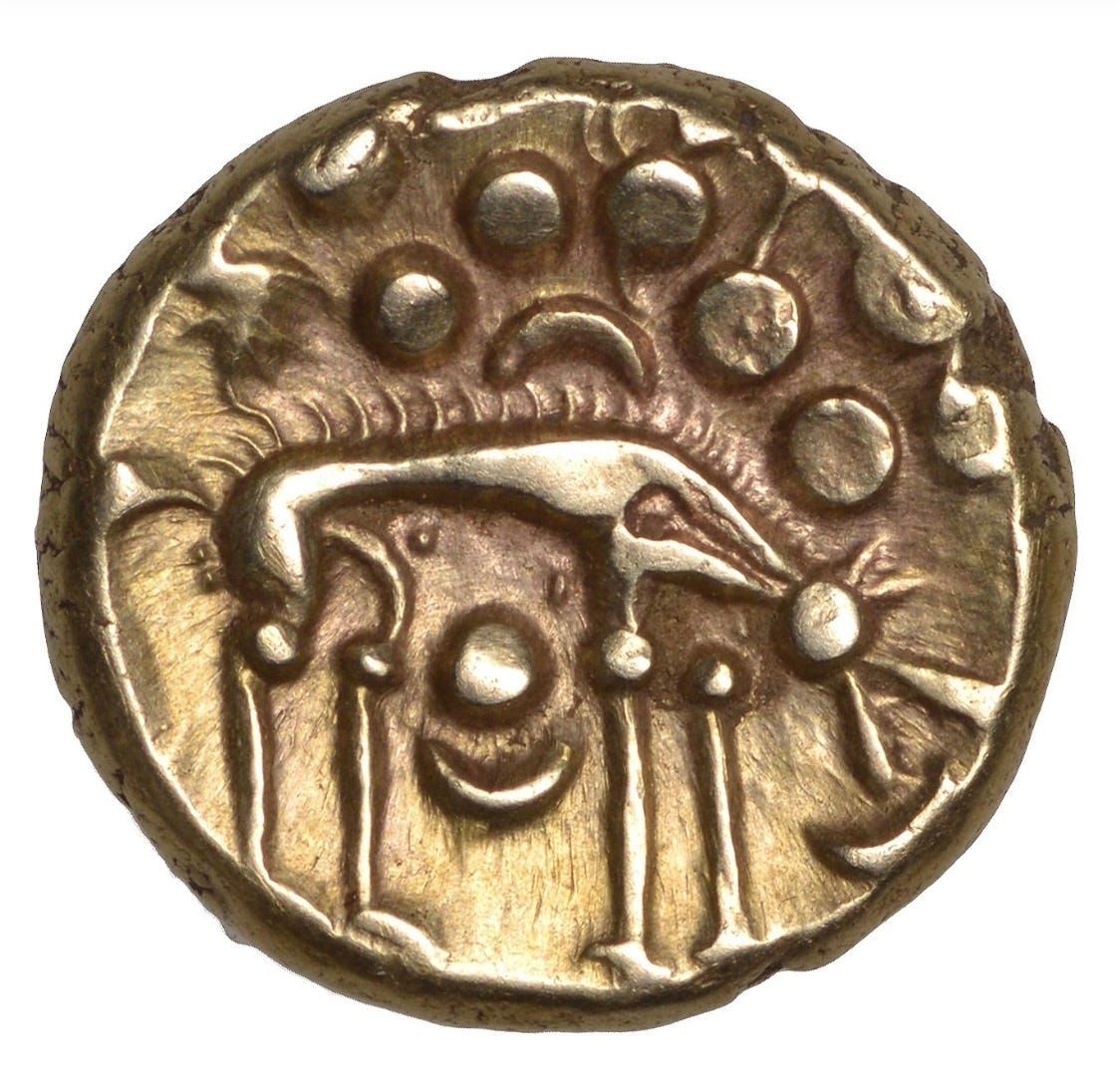
A Norfolk Wolf gold stater of 55 - 50 BCE. These coins are much smaller than you might imagine - this one is around 16mm wide.
At the south western foot of the Palatine Hill where Rome was first founded lay a cave known as the Lupercal. This cave, now lost, was traditionally held to be the location where Romulus and Remus survived through being suckled by a she-wolf. The connection with a vernal deity rests partly on the presence within the Lupercal of a statue of a deity resembling Pan/Faunus. This figure is documented as being as naked except for a goatskin girdle, which does sound fairly wild.
The rites of Lupercalia took place in three locations - the Lupercal, the Palatine Hill and the Forum - and were led by its own priesthood the Luperci, ‘brothers of the wolf’. These rites were themselves quite wild and involved goat and dog sacrifices, and offerings of salted meal cakes prepared by the Vestal Virgins. After the feast, the Luperci cut hairy thongs - februa - from the animal skins before running with these, naked or near naked (and I can tell you that Rome in February is VERY COLD!!) around the city’s original boundary.
As well as purification and purging, the festival was also linked with fertility, perhaps in the same way that many see Imbolc at the beginning of February as the time when seeds begin to awaken. Writing during the time of the early Roman Empire, Plutarch says that:
‘...many of the noble youths and of the magistrates run up and down through the city naked, for sport and laughter striking those they meet with shaggy thongs. And many women of rank also purposely get in their way, and like children at school present their hands to be struck, believing that the pregnant will thus be helped in delivery, and the barren to pregnancy.’
As the observance of Lupercalia was felt to be central to the safety and well-being of Rome, it lingered well beyond the banning in 391 of all non-Christian cults and festivals. When Pope Gelasius I (494–96) sought its forceful abolition, claiming that only the ‘vile rabble’ were involved in the festival, the nominally Christian Roman Senate could not bring themselves to risk Rome’s spiritual and physical health and refused to prohibit it. I wonder whether traces of Lupercalia remain in Rome to this day?
I’ll leave the last word to William Shakespeare, who knew a thing or two about classical history and lore. His play Julius Caesar opens during the festival of Lupercalia and sure enough, Mark Antony is instructed by Caesar to strike Calpurnia, his wife, in a bid to help her to conceive.
Perhaps not quite the last word, actually, as I think that properly belongs to the wolf. Were the Iron Age Wolf coins - which were, as we’ve heard, a Norfolk speciality -inspired by the connection with the wild god Faunus who seems to have had Lupercalian connections? The coins much pre-date the Roman artefacts found in this county, but in his local guise was Faunus himself an echo of an earlier Celtic deity?
Or does the imagery relate to Scandinavian end-of-the-world myths involving the Fenris Wolf and the sun and the moon, which we think of as belonging to the much later Viking age? After all, the Iceni had sea-borne links with the northern Germanic tribes and, in this remote corner of the isle, travelling by water was actually easier than journeying over land.
Perhaps we’ll never know.
Meanwhile, under the weathered February plough soil - now at its most willing to reveal its treasures - another golden wolf snaps its jaws, waiting to rest once more upon an eagerly outstretched hand.
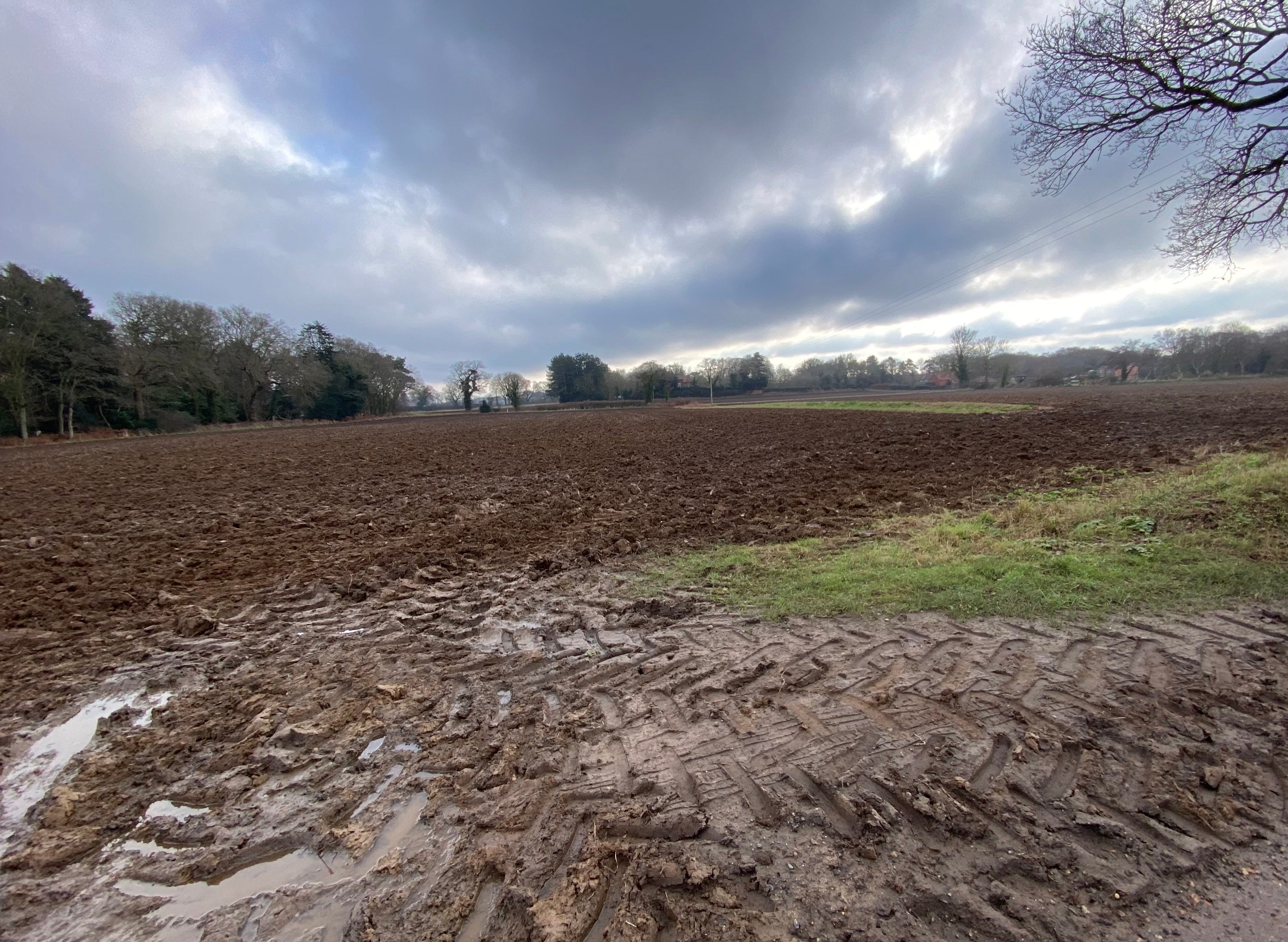
Field along the lane, 4 February 2026
Here are some blessings in my life; a list for Lupercalia.
Adventures great and small
and being able to run, jump and dance.
The flutterings of tiny birds.
Wood fires and wood smoke.
The silent white flap of a barn owl.
Shimmering reed tops.
Words and their magic.
Martin, ancient fairy-guardian of the canal.
The swimmers and the folkies.
Mike who burned poll tax forms by the Peasants’ wayside cross.
Ken with his driftwood guitar.
Tony coaxing tales from his twelve-string.
James and Diana who sing from the back of a cornflake packet.
The sea.
The marsh, the crows and the sunset.
And the Norfolk Wolf who brushes gold across it all.
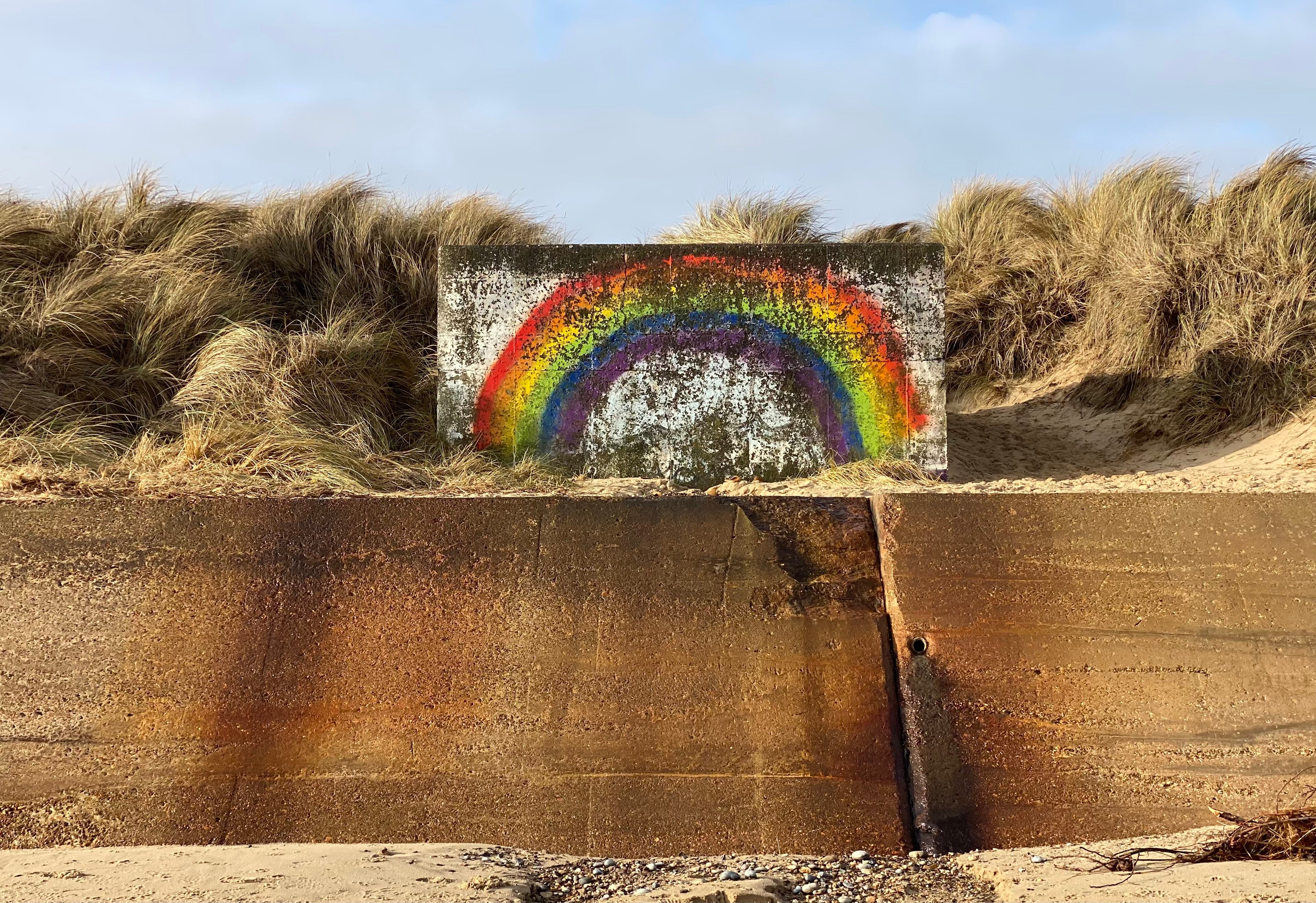
A whole rainbow of blessings at Caister beach, Norfolk, 8 February 2026
SAINT VALENTINE & THE WOLF: a recipe for Lupercalia
If you happen to know a wolf with a sweet tooth, this recipe would be just the thing to offer as a Lupercalia treat. Clearly, the wolf was highly honoured in Rome and as such it would seem appropriate to show appreciation with something made and given from the heart. Perhaps it’s a way of redressing the balance, considering the bad press that wolves receive in fairy tales.
And, let’s not forget that 14 February - the day before the Lupercalia - is Saint Valentine’s Day. The literary association between the Lupercalia and Saint Valentine’s Day dates back to the fourteenth century, to the time of Chaucer and the poetic traditions of courtly love. Although a direct link between the two festivals is not universally agreed, it’s possible that, over time, the sexually charged fertility aspects of the Lupercalia were made more chaste and therefore acceptable within a Christian context. It’s even been suggested that the colour red that’s so strongly associated with Saint Valentine is an echo of the sacrificial blood that was smeared onto participants as part of the Lupercalian rites.
So I thought you might like a dual-purpose recipe this time around. Perfect baked either to treat a wolf (with a nod to the salt meal-cakes prepared by Rome’s Vestal Virgins) and/or to honour your own true love, here is a traditional bun for Valentine’s Day.
In her Almanac for 2024, Lia Leendertz explains that Plum Shuttles are thought to date back to the time when weaving by hand loom and shuttle was practised in many households. Another clue to the age of this traditional delicacy is that raisins, specified here, were known as ‘plums’ until the eighteenth century. Here’s my version of Lia’s recipe:
250g bread flour, plus extra for kneading
1 teasp sugar (I use coconut sugar)
7g fast-action dried yeast
100ml soya (or other) milk
25g vegan butter or 2 tbsp olive oil
0.5 teasp salt
1 orange, zested
60g raisins
1 tbsp sugar
1 teasp caraway seeds, freshly ground or whole
Tip the flour into a large bowl. In separate ‘corners’ put the sugar, yeast and salt.
Warm the milk with butter or oil until hand hot, then pour into a well in the centre of the flour.
Mix, then knead in the bowl, before adding the zest and raisins and kneading again.
Turn onto a well-floured surface and knead for a few more minutes until smooth and elastic, adding more flour if necessary.
Return to the bowl, cover and leave somewhere warm to rise until doubled in size, up to two hours.
Knock the air out of the dough before dividing into 12 oval shaped buns, thinner at one end. Spread out on lined baking trays, cover with a tea towel and leave for a further 30 minutes to rise again.
Preheat oven to 200C, Gas 6. Brush the buns with milk and then scatter over the mixed sugar and caraway seeds.
Bake for 30 minutes, allowing to cool before eating - or offering to a wolf.
Until next time.
With love, Imogen x
PS: If you enjoy Bracken & Wrack you might like to join our Between the Moons community. Not only will you have access to a growing archive of members-only posts - often photo-essays, podcasts or videos - which I send out between the free newsletters, but you will be supporting my work in research and writing which I’m hoping will eventually culminate in a physical book. It’s £5 to try it out for a month, with a discount if you choose an annual subscription. If you’d like to do this (or to gift a subscription to a friend) it’s easy to upgrade by clicking the button below. I’d be delighted to welcome you to our merry band of travellers!
I’m not a fan of February for several reasons but it has its benefits. At the moment, watching the murmuration outside on the common and then hearing the starlings chattering in the reeds early in the morning, these make February bearable! Another lovely collection, Imogen, thank you ❤️
I’d be interested in the colour of August (because that’s your equivalent of my Lammas) - here I think I would say yellow. The dried grasses, the drying of many plants - not quite to a brown stage nor orange or russet. And the colour of butter that I use to make my loaf. I like this idea! X